
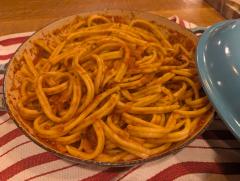
 Here's a spicy treat from hot, sunny Calabria! It's a very simple recipe, but it requires one hard-to-find ingredient: 'Nduja. 'Nduja is a spicy Calabrian paste of fatty pork and fiery Calabrian chilis. The spiciness of the meat is balanced by the sweetness of the onion, which is why you want a sweeter variety like Vidalia.
And that's all there is to it: Sweet onion and spicy 'Nduja, held together in a smooth tomato sauce, and served over a good toothsome pasta!
 This is a beautiful and delicious crowd-pleaser! The "heart of the cream" is a simple combination of cream cheese, heavy cream, and powdered sugar with a touch of vanilla and lemon zest. It makes this beautiful white confection that people always return to for seconds. Dressing it with a bright red raspberry or strawberry sauce makes it even more eye-catching and tasty.
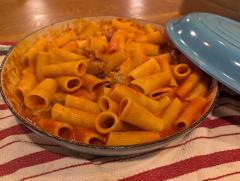 Zozzona means a hot mess in Italian, and Pasta alla Zozzone is a rich delicious crowd pleaser of a hot mess! It's loaded up with everything to alarm your cardiologist: sausage, guanciale, pecorino romano, and egg yolks. There's tomato sauce too, so that's healthy.
 On Sunday 10 August 2025, we had our neighbors the McKinnons and the Hylanders over for a feast of two lesser-known regions of Italy: The island of Sardinia and skinny little Liguria, home of Genoa and the Cinque Terre, pressed between the mountains and the Tyrrhenian Sea.
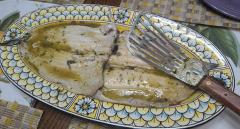 I got Ada Boni's wonderful Italian Regional Cooking many years ago and it is still one of my favorite sources of inspiration. This Sardinian dish captured my imagination probably 15 years ago and I have wanted to make it ever since.
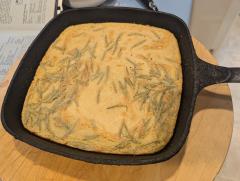
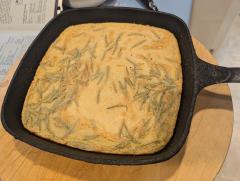 arinata is a crispy thin bread of chickpea four and water, cooked in an oiled skillet at high temperature. It's gluten-free, so it's not like most breads, but it's too crispy to be called a pancake. It has a natural sweetness, but I still classify it as a savory dish. In Liguria and along the northern Tuscan coast of the Tyrrhenian Sea as far as Pisa it's a street food, but we're not so familiar for it to have "bred contempt", so with good technique and quality ingredients it can go nicely with any assortment of aperitivi.
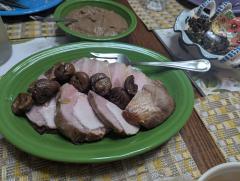 This recipe is not difficult and the flavors are wonderful! This would be perfectly suitable for a dinner during the holiday season.
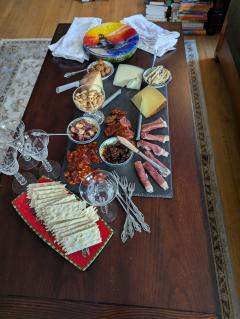 On Sunday, 3 August 2025, we had our friends the Quinlans and the McKinnons over for a Spanish summer beach dinner. We started in the living room with the:
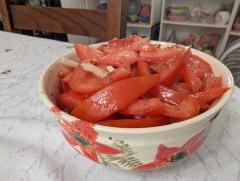 Three kinds of tinned Spanish seafood: octopus, razor clams, and scallops. These are trendy these days. They are far superior to the Brunswick sardines on toast of my youth, but they are also quite expensive!
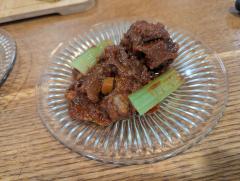 This is the most famous of the Italian recipes for oxtail. It's got incredible rich flavor from slow cooking the meat with tomatoes and vegetables, and then finishing it with pine nuts, golden raisins, and bitter chocolate!
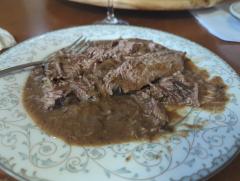 In this classic Italian braised beef recipe, a
 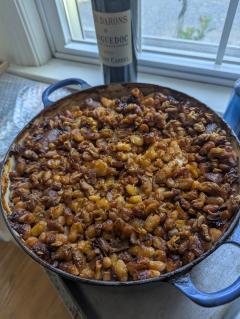 In the United States, Cassoulet Toulousaine is the most well-known of the three classic cassoulets of southwestern France, and maybe the easiest to get the ingredients for because D'Artagnan sells an excellent Cassoulet Kit.
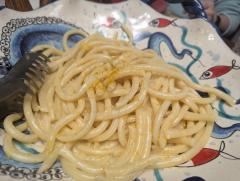 Maccheroni al Limone is a delicious light pasta dish for summer. A small serving makes a great appetizer because it wakes up your taste buds without filling you up.
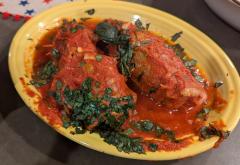 This beef braciole is a fundamental part of a traditional Neapolitan Sunday dinner, simmered slowly in a tomato puree that becomes the sauce for the ziti or rigatoni that always accompanies it. It's loaded with great flavor from long simmering of fine ingredients.