
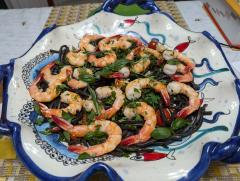
 This is a primo version of the classic Trieste dish Scampi alla Busara, but the traditional scampi (langoustines) are hard to come by in New England, and when made with shrimp it's a great pasta-topper!
Northern Italy is known for risottos and polenta and potato dishes, and pasta is usually of the fresh variety made with 00 flour and eggs, but of course everyone has access to store-bought dried durum semolina pasta and that make this classic from the far northeastern coastal regions of Trieste, Aquileia, and Grado into something that you can easily make on a weeknight if you have canned cherry tomatoes and frozen shrimp.
This particular version I made with black squid ink pasta because I thought it would look dramatic, but that's not part of the recipe.
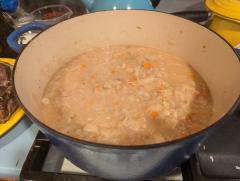 Despite its name proclaiming a Genoese origin, this delicious Neapolitan pasta sauce, a cousin of the French soubise onion sauce, is unknown in Genoa today. It is thought to have been brought to Naples by sailors from Genoa long ago, and to have survived in the south long after it faded into obscurity in the north.
 This is not a vegetarian recipe. A beef roast cooks with the onions, flavoring them, but it is not served in the sauce or with the pasta at all. In Italy it's traditional to have a simple pasta course before a main course, the primo before the larger secondo. At a fine dinner, you would expect a small dish of pasta with one of the many wonderful sauces (ragu, sugo, salsa) invented for the purpose. A heaping plate of spaghetti is what you eat when you can't afford the secondo course.
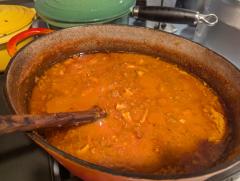 This is the classic Italian meat sauce, with an official recipe approved by the Accademia Italiana della Cucina and recorded with the Bologna Chamber of Commerce. The recipe gets updated every few generations to account for the changing availability of ingredients, and importantly, to note which popular variations that have arisen are incompatible with the Accademia's focus on authenticity and quality (for example, using cream instead of milk, or brandy instead of dry wine).
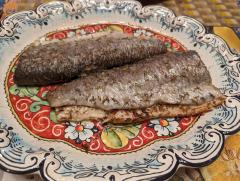 This French trout dish is easy to prepare and you can have it on the table in half an hour. Besides the fish, it uses only 5 ingredients that you probably have in the house already, so it's a good recipe to know if you're sometimes lucky enough to get fresh trout!
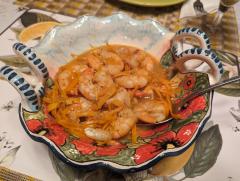 Here's another unexpected and delicious flavor combination from Italy, somewhat Americanized. The original Italian recipe, gamberoni all'arancia in padella, used olive oil instead of butter, used bigger shrimp, it skipped the brief marination step, and it did not include the orange zest. I tried it that way first, but then I did it this way and we both liked it better. I think the shredded orange zest makes it more pretty, too.
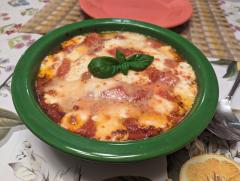 This is a staple of children's menus but it's also a delightful primo course when made with good ingredients and fresh gnocchi, and it's vegetarian, too! Kids like it because it has no garlic or onion, but top-quality ingredients really shine, like bright sunny Sorrento in the summer!
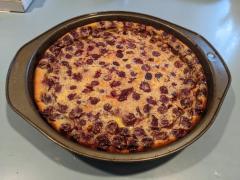 The Clafoutis Limousin, or cherry clafoutis, is the best known of this traditional and simple dessert style. It can also be made apples, pears, plums, or berries. If a menu says only Clafoutis (also spelled clafouti), they mean the cherry version.
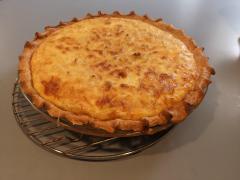 The flamiche is a leek quiche. It's a mild dish because the oniony leeks are first stewed until they are tender. Some cheese enriches the flavor while keeping this quiche suitable for vegetarians.
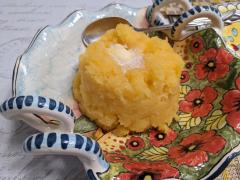 In New England, rutabaga is often called turnip, which is a related but different vegetable. This is the most common preparation, often to accompany a Sunday roast beef or chicken during cold-weather months. In general, turnips are smaller, whiter inside, and often sweeter, while rutabagas are often bigger, yellower inside, and they usually have more of a kind of bitterness that complements a rich dinner.
 I make this at least monthly. It's quick, easy, and delicious. The cornmeal brings an exciting flavor and texture that's a nice change from the usual seasoned flour dredge.
 Here's how to make a sandwich the way they do in New York City Jewish delis. If you can, use calf's tongue in preference to beef tongue, but both are good.
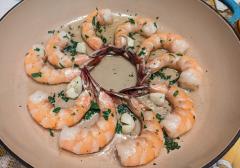 This recipe for gamberoni al forno (baked jumbo shrimp) is simple and easily expandable. It has just four ingredients, three of which you probably have in the kitchen most days.
 This is a tasty soup with few ingredients. The veloute technique is easy, just like making a roux-thickened sauce, so if you find that easy then the whole thing is easy.
 This is a simple and delicious preparation for fillets of sole or trout that is easy to make on a weeknight. You toast the sliced almonds in butter, and then pan-fry the fish in butter and dress it with the almonds.