
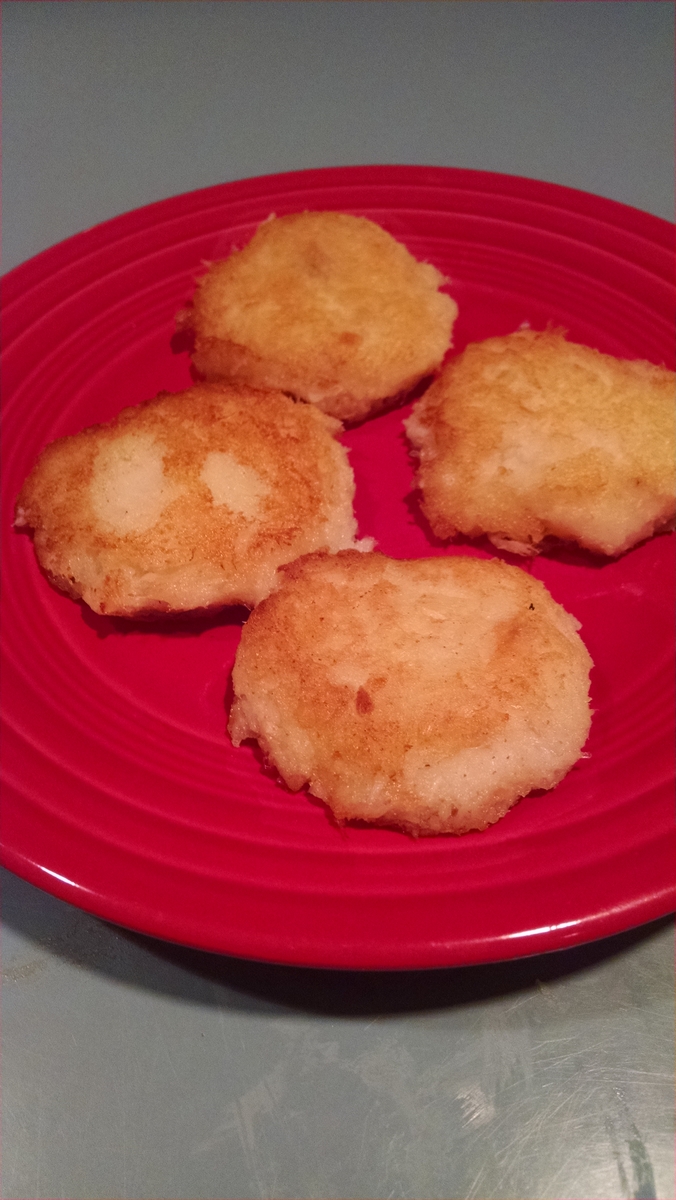
This New England favorite is a classic accompaniment to Baked Beans. It's easy to make, and the uncooked mixture stores well for a few days, so you can easily make multiple meals from one recipe.
I searched through many recipes to find one that would have satisfied my mother-in-law, who was old Yankee on both sides back to the 17th century. This recipe is simple, so it relies on ingredients and technique. I used Yukon Gold potatoes and frozen salt cod from my local fishmarket (not the kind that comes in a box).
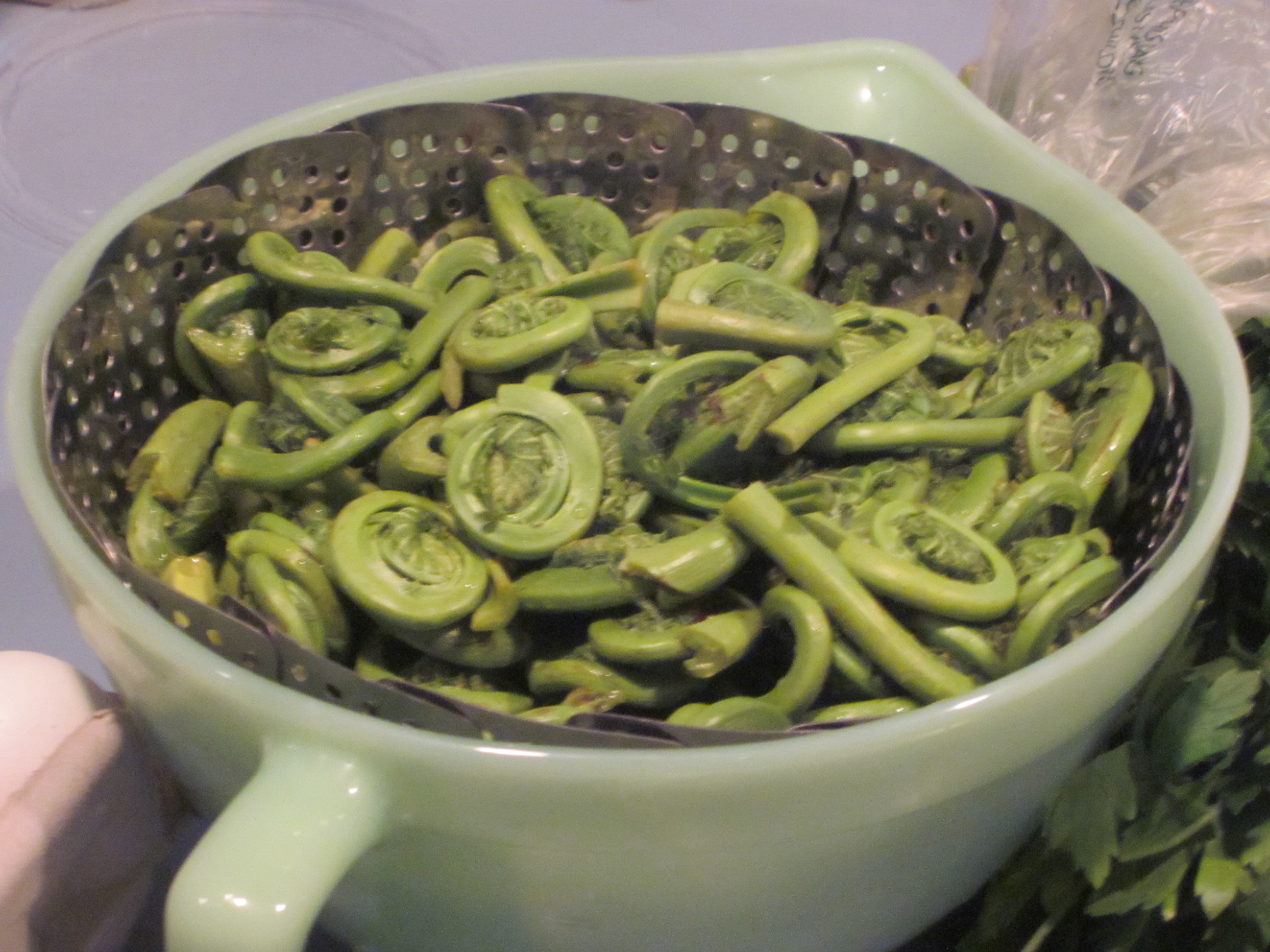 Fiddleheads are the still-curled young shoots of certain ferns. They are harvested for a brief time in early spring, so, like
 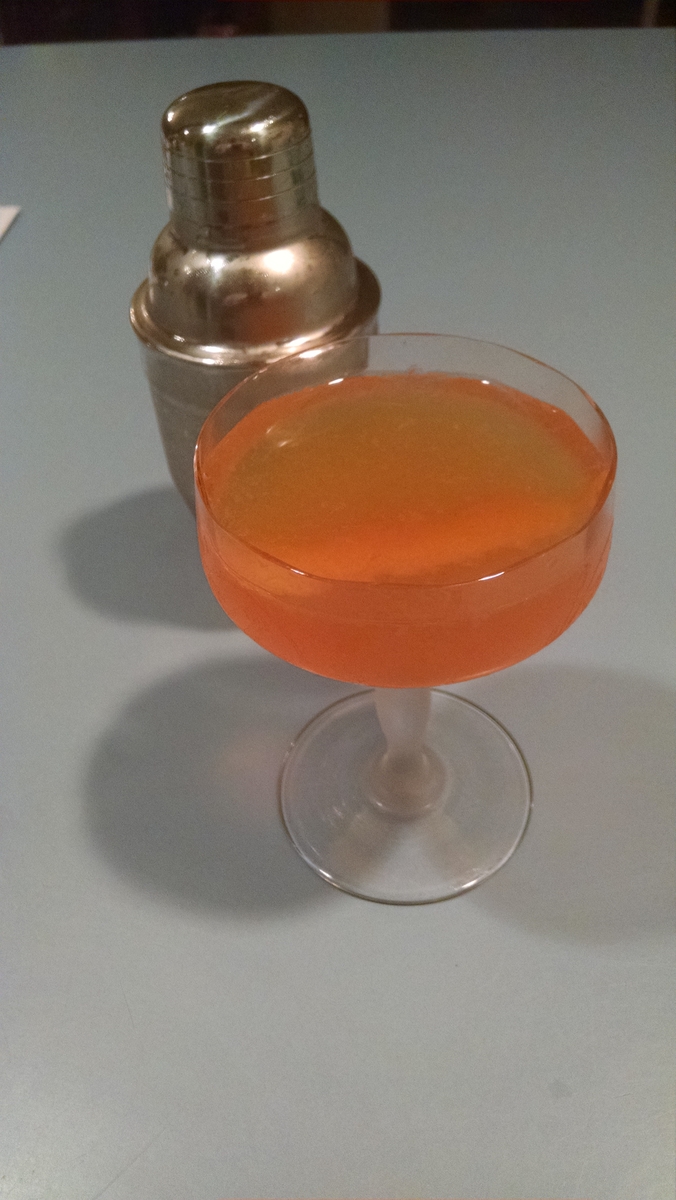 I was reading an old occult-action thriller of the Weird Tales variety, The Brood of the Witch-Queen (1918) by Sax Rohmer. During a scene at a masked ball in Cairo, our protagonist says to his ailing companion:
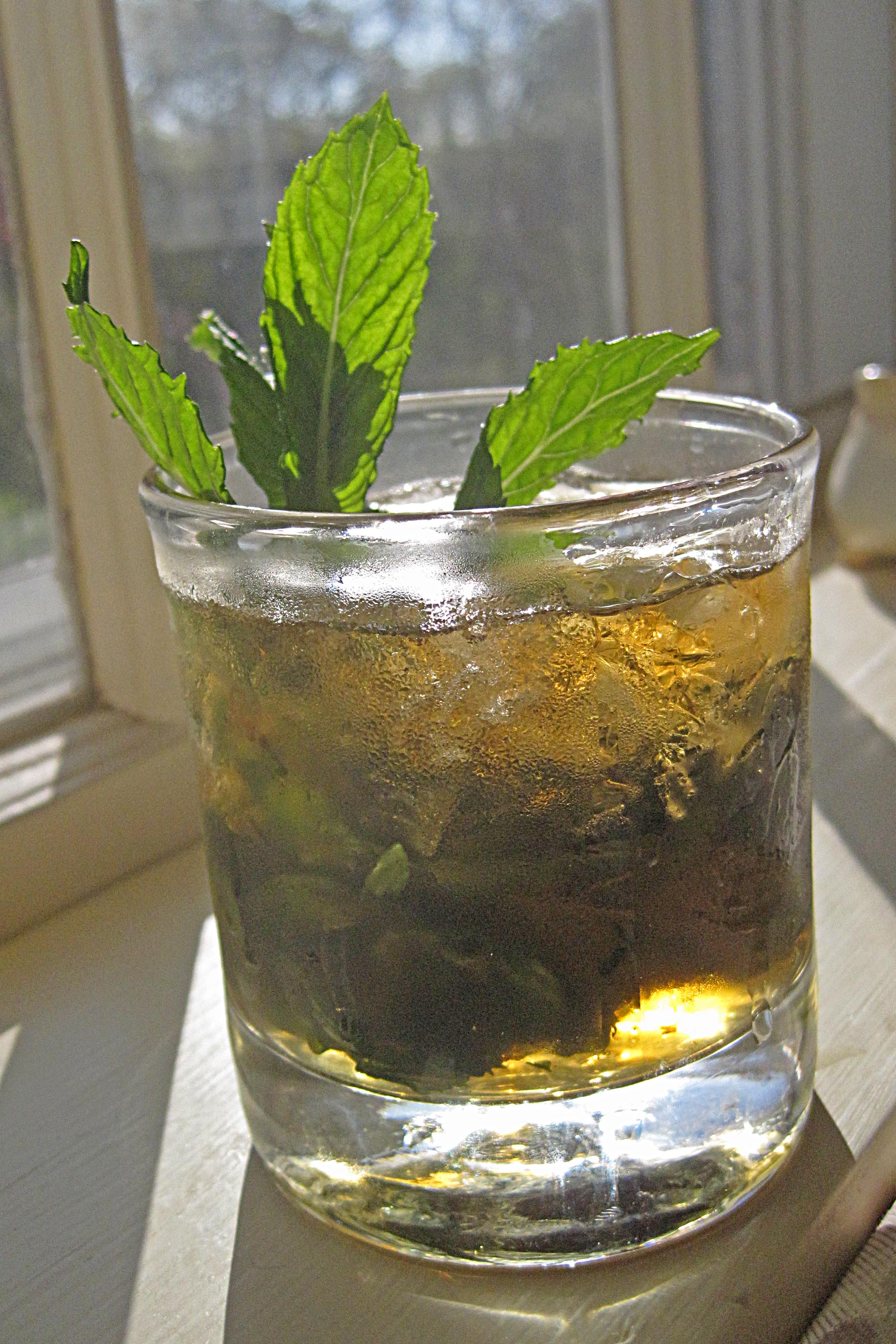 The
The  Richmond and Annette gave me a bottle of Calvados (French apple brandy) for my birthday. I love Calvados, but I seldom have enough to spare for cocktailian experiments. This surprise windfall enabled me to try a few forgotten cocktails from Ted Haigh's
 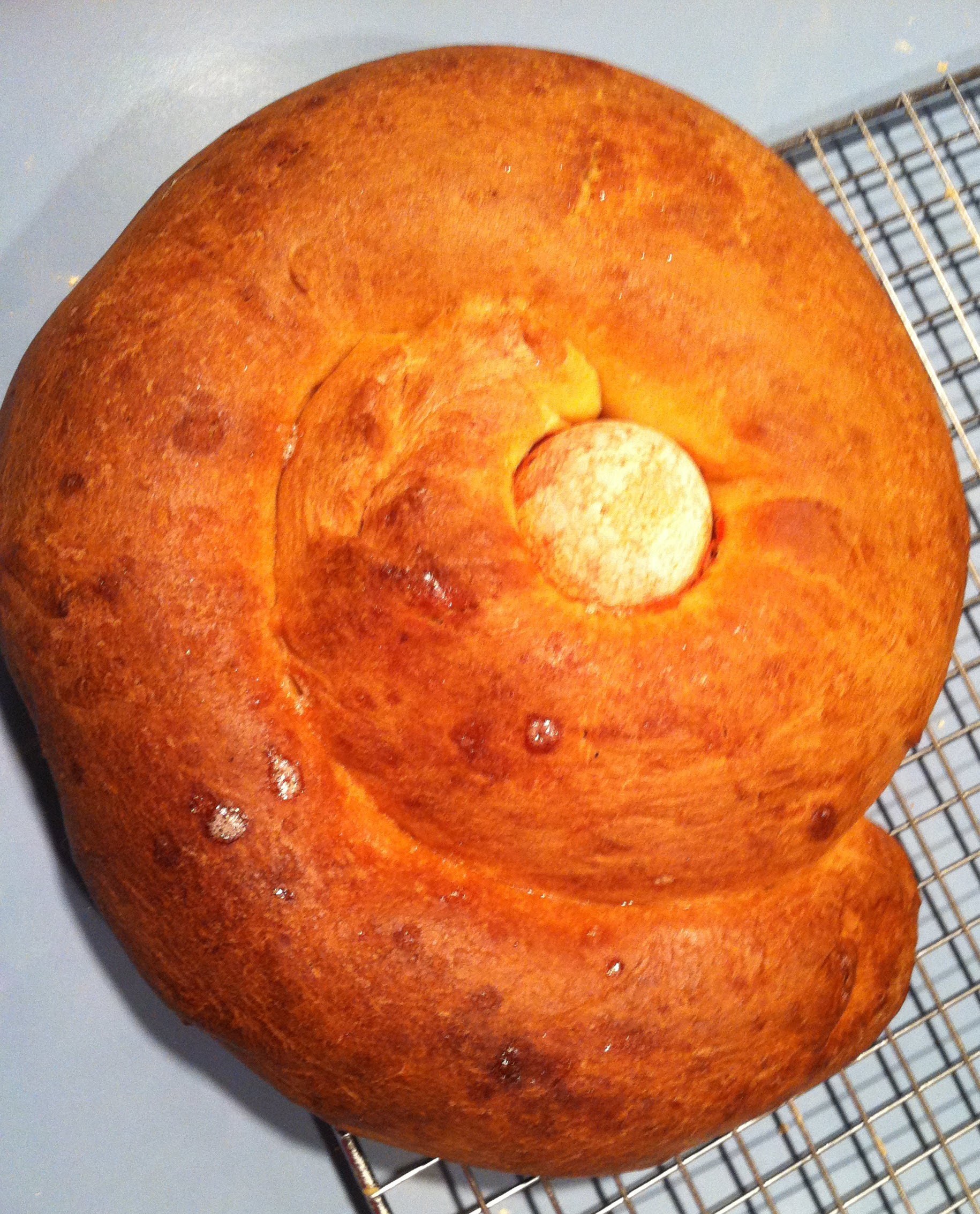 Tsoureki, or Greek Easter Bread, is difficult, expensive, and delicious in an exotic way that takes it far beyond the realm of everyday cuisine. It is worth learning, if you have the skill, the time and patience, and access to three peculiar ingredients.
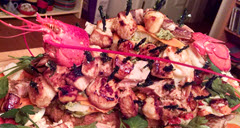
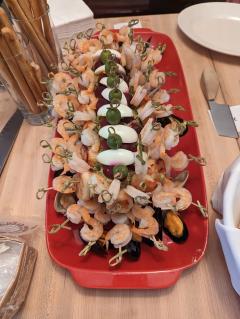 The middle image was for a smaller event at the Old Colony Club, this one a structured wine tasting with 36 guests. This Capon Maggro was made by my friend Mary Quinlan. It had to share a table with cheeses and salumi from Piedmont and Genoa, so she made it simple and elegant, so as not to overshadow the other foods and the Roero Arneis and Gavi di Gavi wines that we were showcasing in this room. In addition to the basic structure of bread topped by the vegetable salad garnished with seafood, she also added steamed mussels and cherrystones around the bottom for color contrast. The white and green along the top are quartered hard-cooked eggs and large green pitted olives.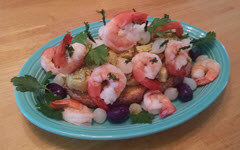
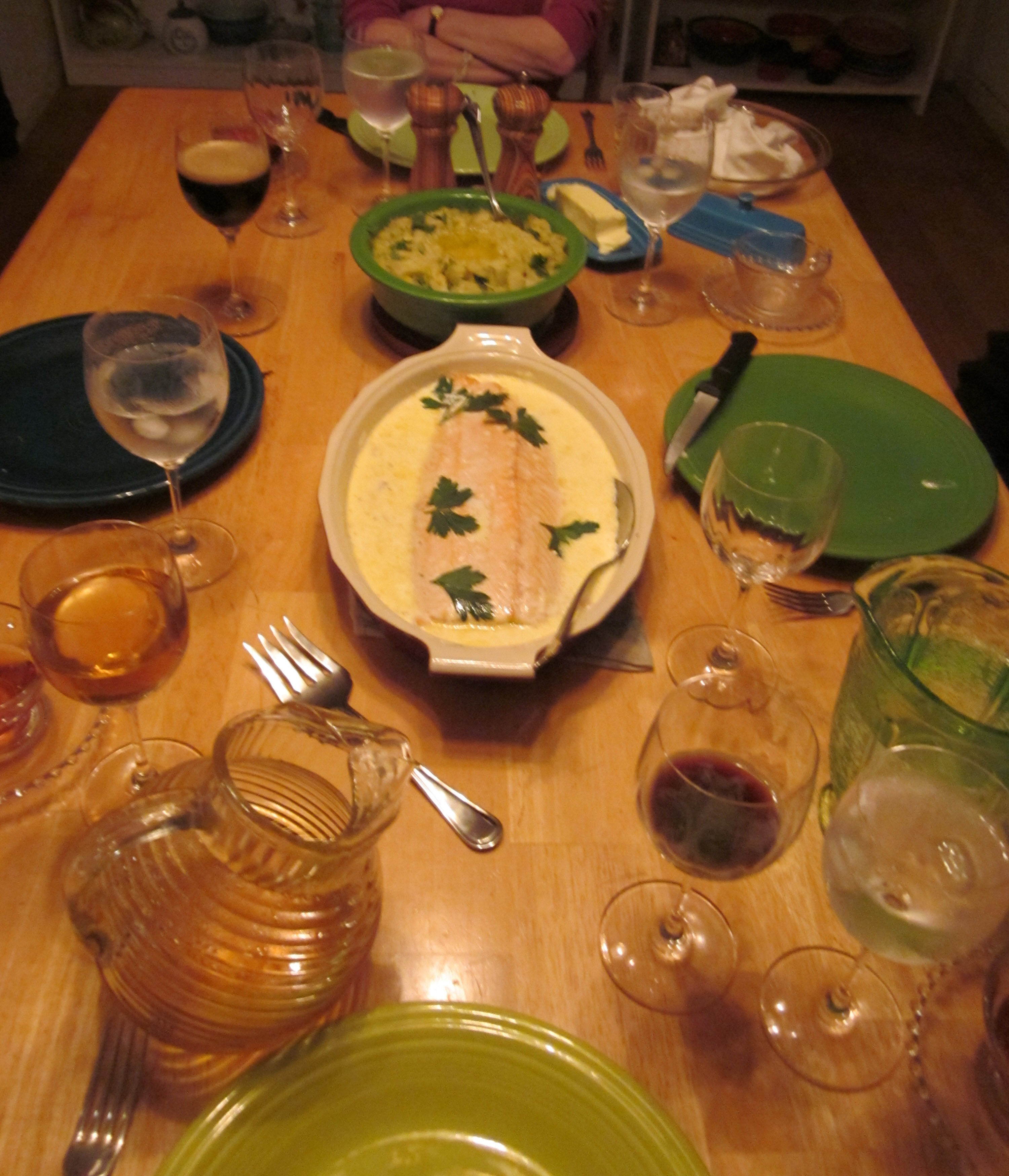 My father's mother was born Peggy McBreen on Saint Patrick's Day in Bailieboro, County Cavan, Ireland. She's no longer with us, but I remember her every St Patrick's Day with an Irish feast and a proper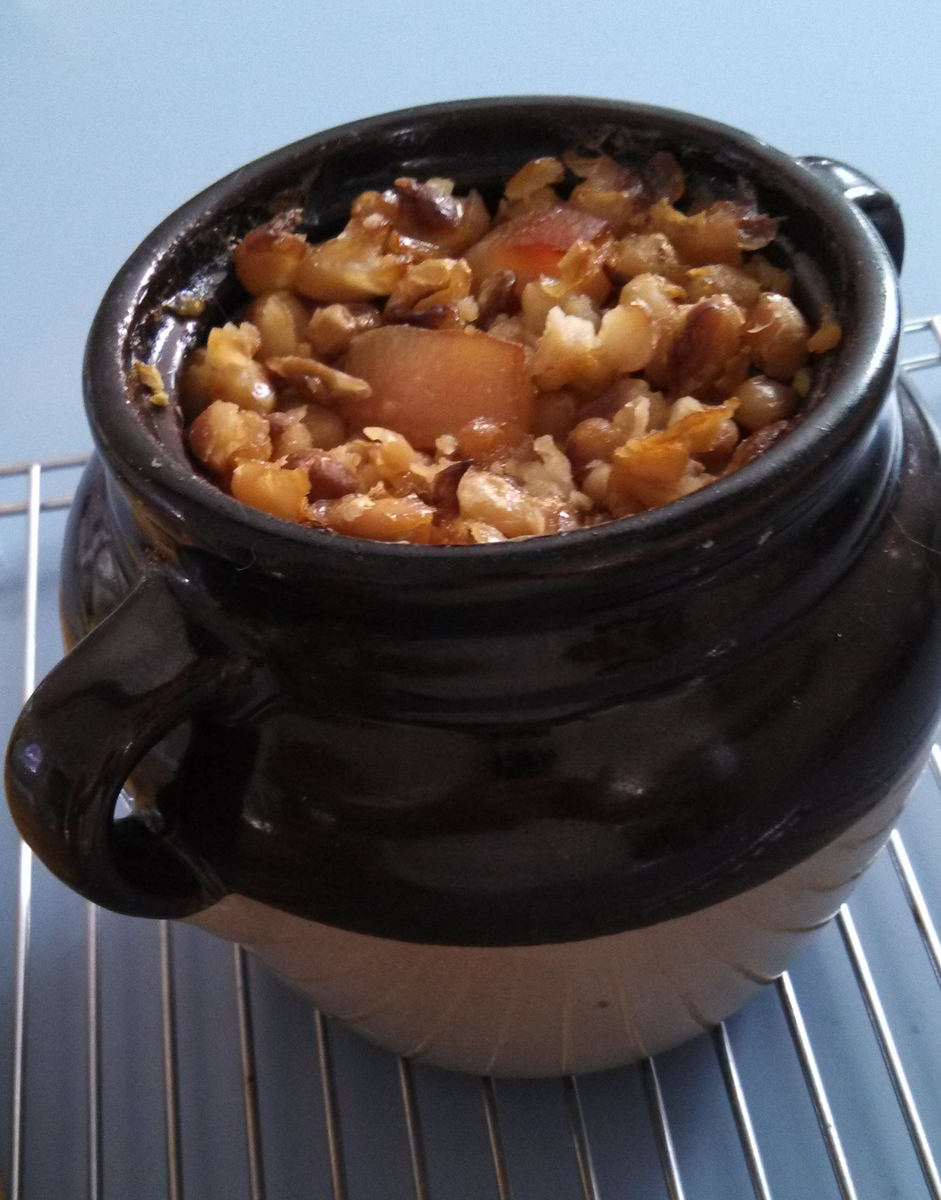
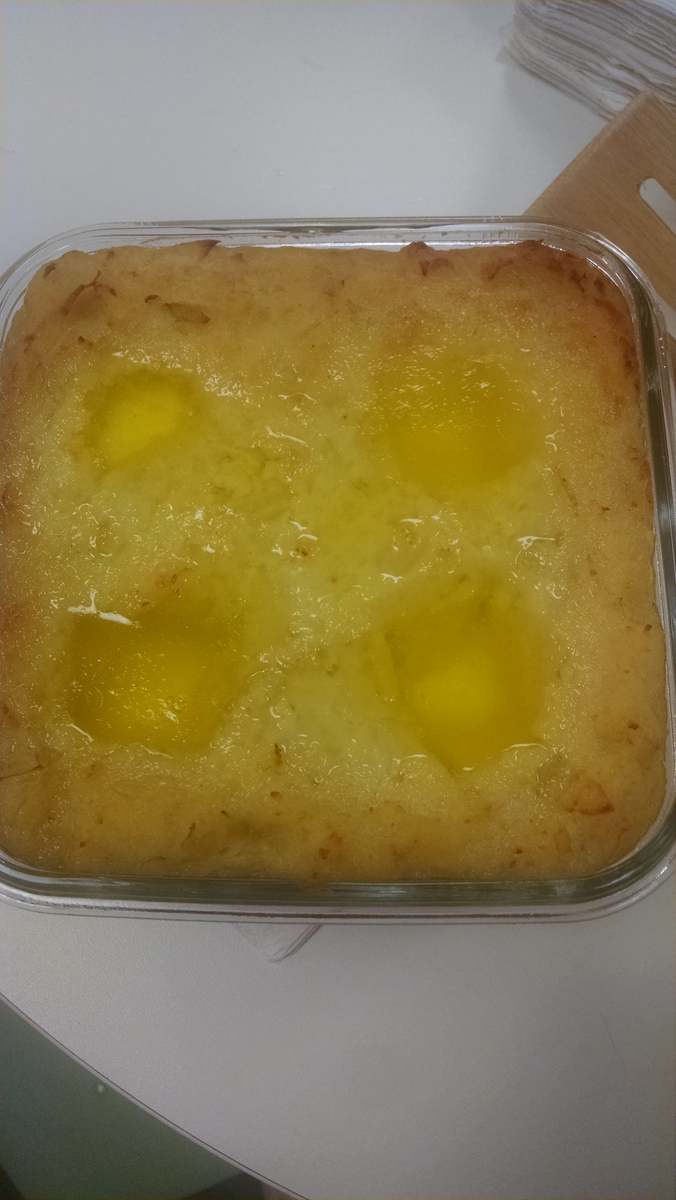 Colcannon is a traditional Irish vegetable side dish made with mashed potatoes and shredded cabbage, flavored with leeks boiled in milk or cream. After it is all mashed together it gets baked again and served with melted butter that sits in a well in the center.
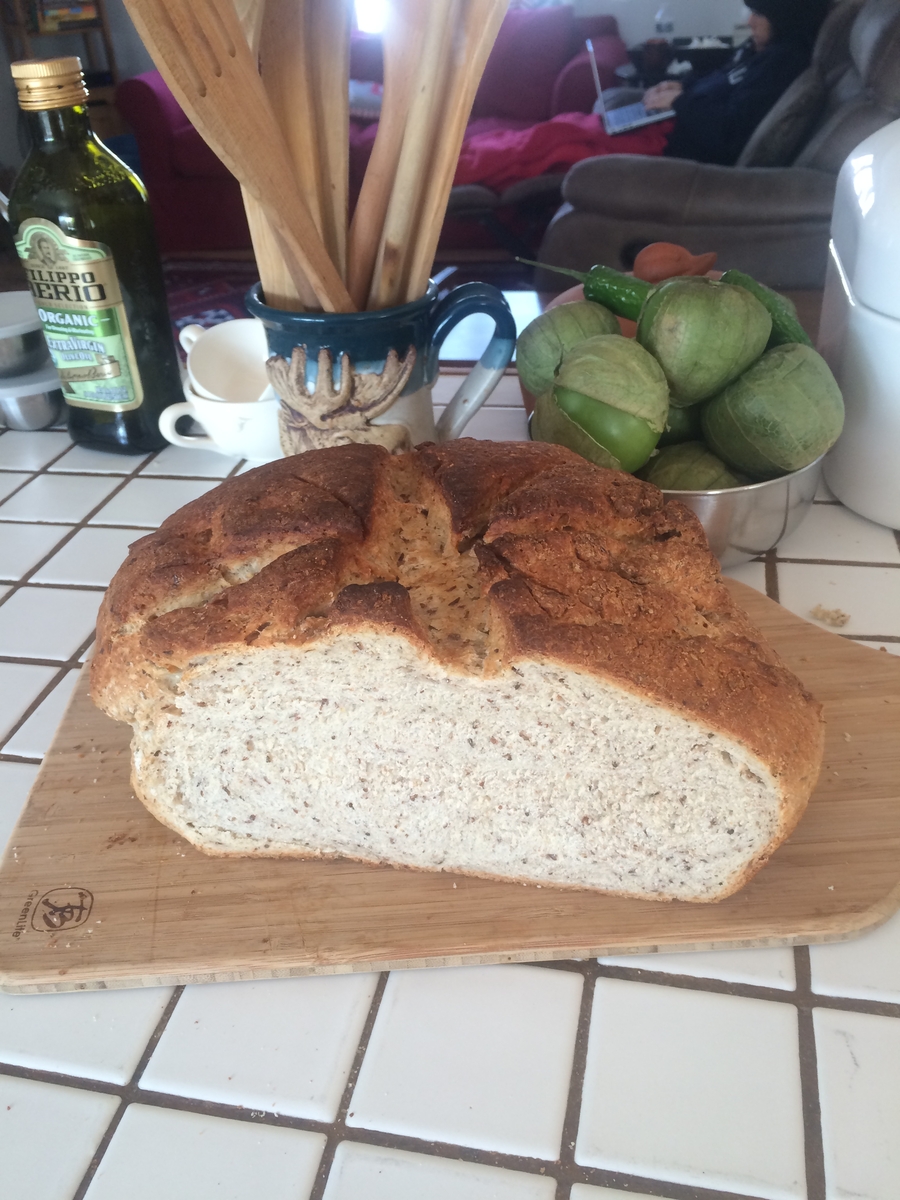 Here's a hearty bread for deli sandwiches or stew bread bowls.
 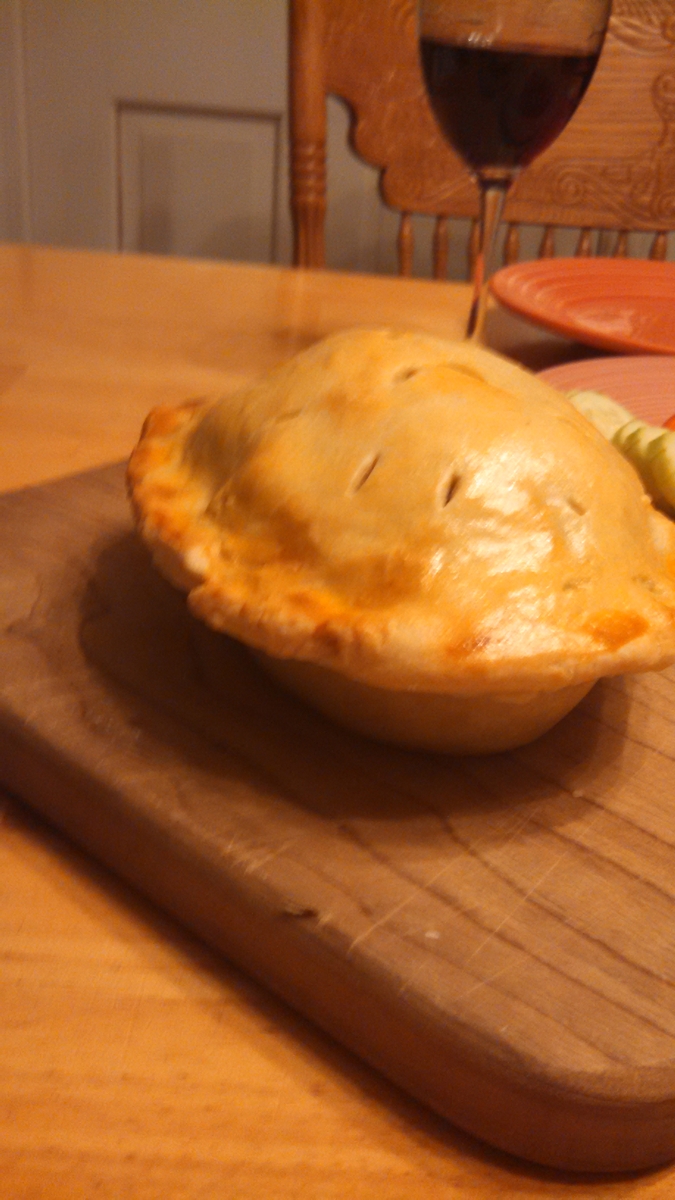 This Russian fish pie is wonderful made with Atlantic salmon. It's a big recipe, and a festive one, so it's great to prepare a big one for a crowd or you can make four smaller ones for a more intimate dinner (as shown here). Much of it can easily be prepared ahead of time, leaving only the final assembly and baking to be done on the day of the great feast.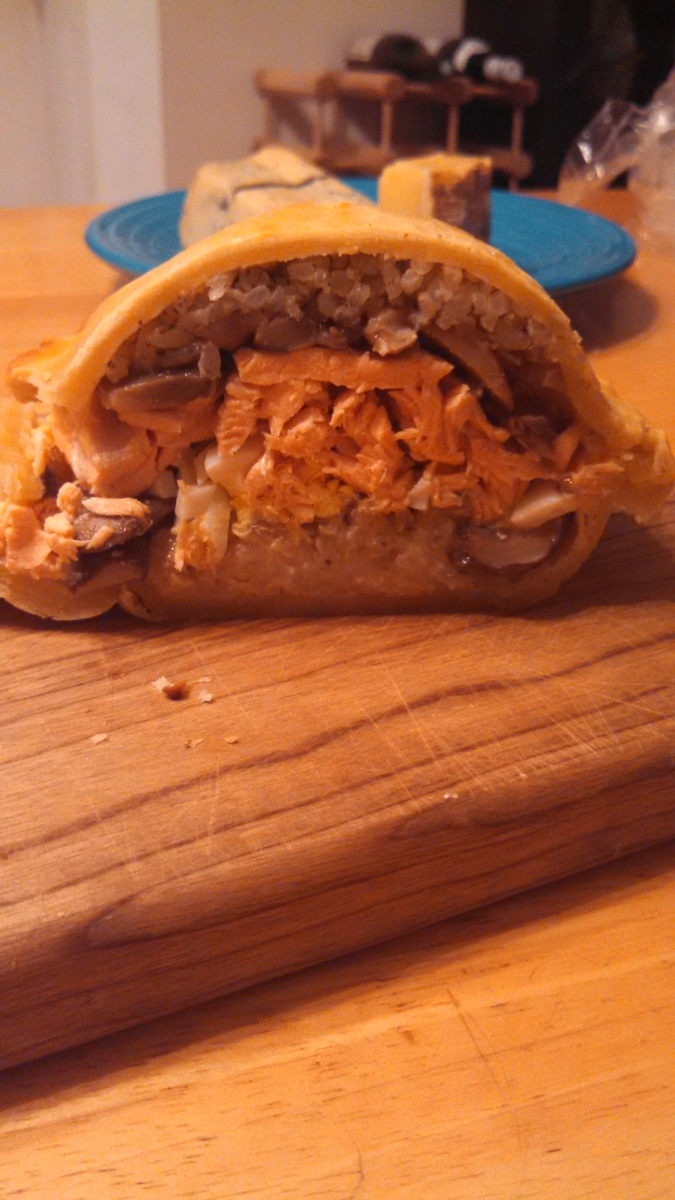
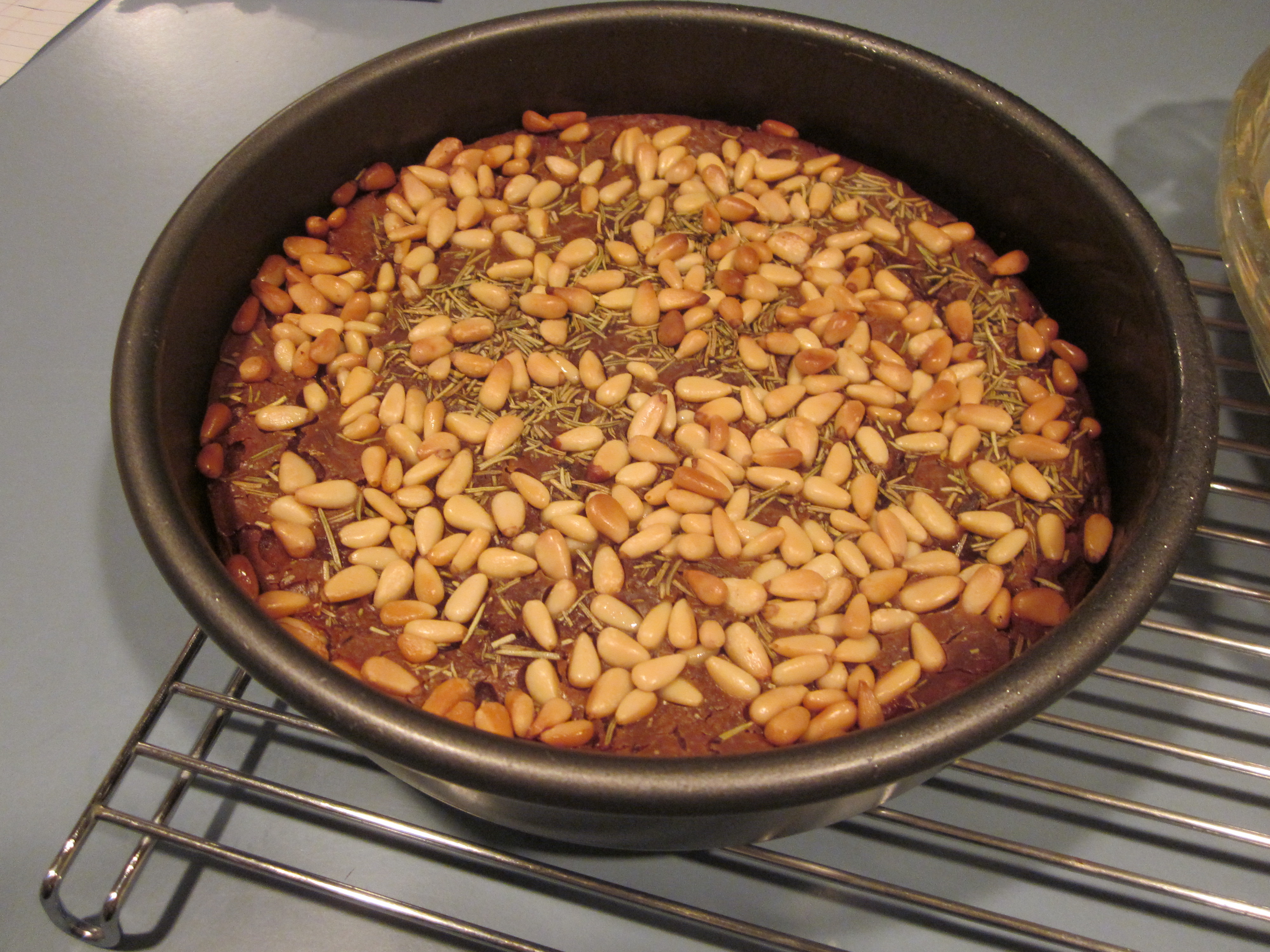 Castagnaccio is a traditional Tuscan unleavened bread for travelers and field-workers. It's heavy, flavorful, and nourishing without being too sweet.