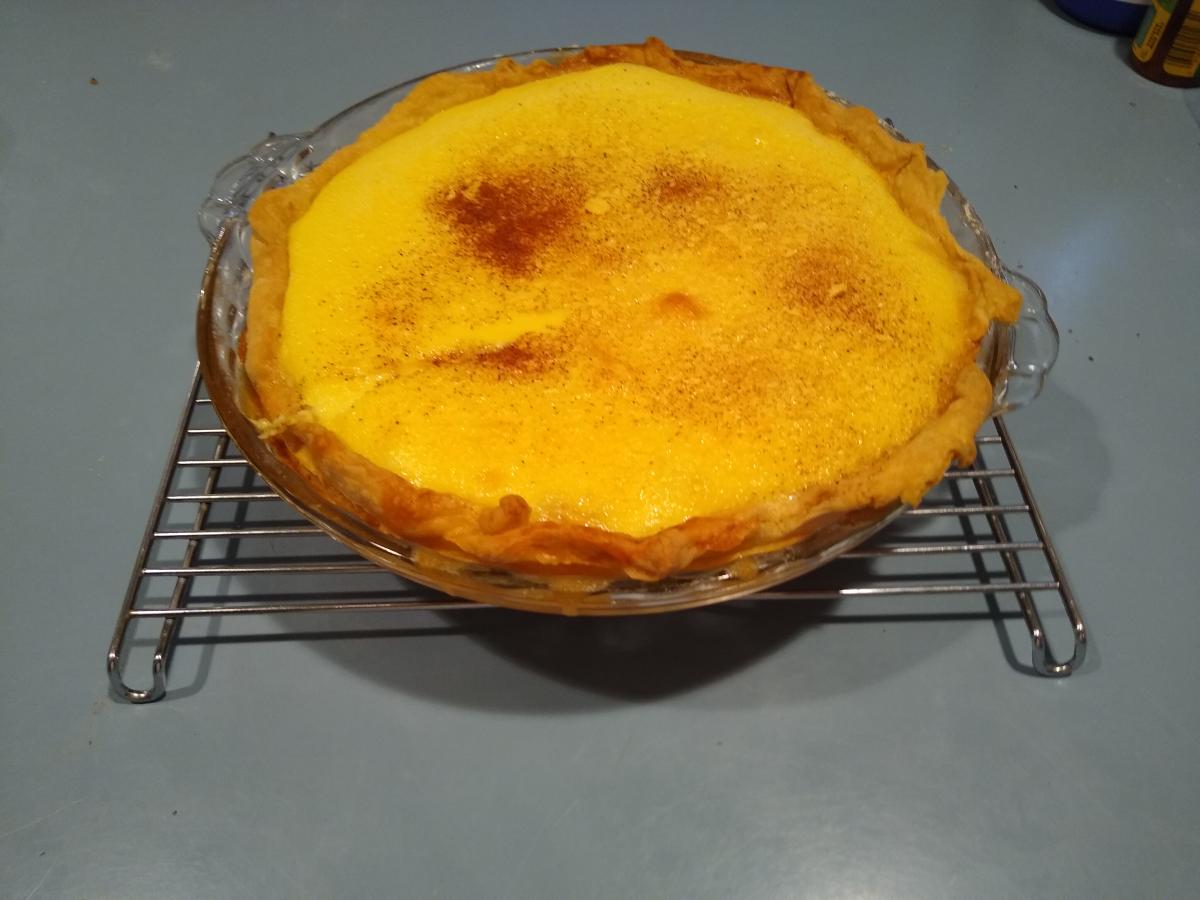
This was a special request from Lorna, reminiscing about her mom's kitchen. It's easy to make, requires only a few common ingredients, and it's not too sweet.
I liked this best with a cup of black coffee. I thought ice cream or whipped cream would be overdoing the dairy.
This is baked at a pretty slow 300 degrees. A lot of ovens become less accurate at lower (and higher) temperatures, so it may take longer than you expect; it's a good idea to have an oven thermometer.
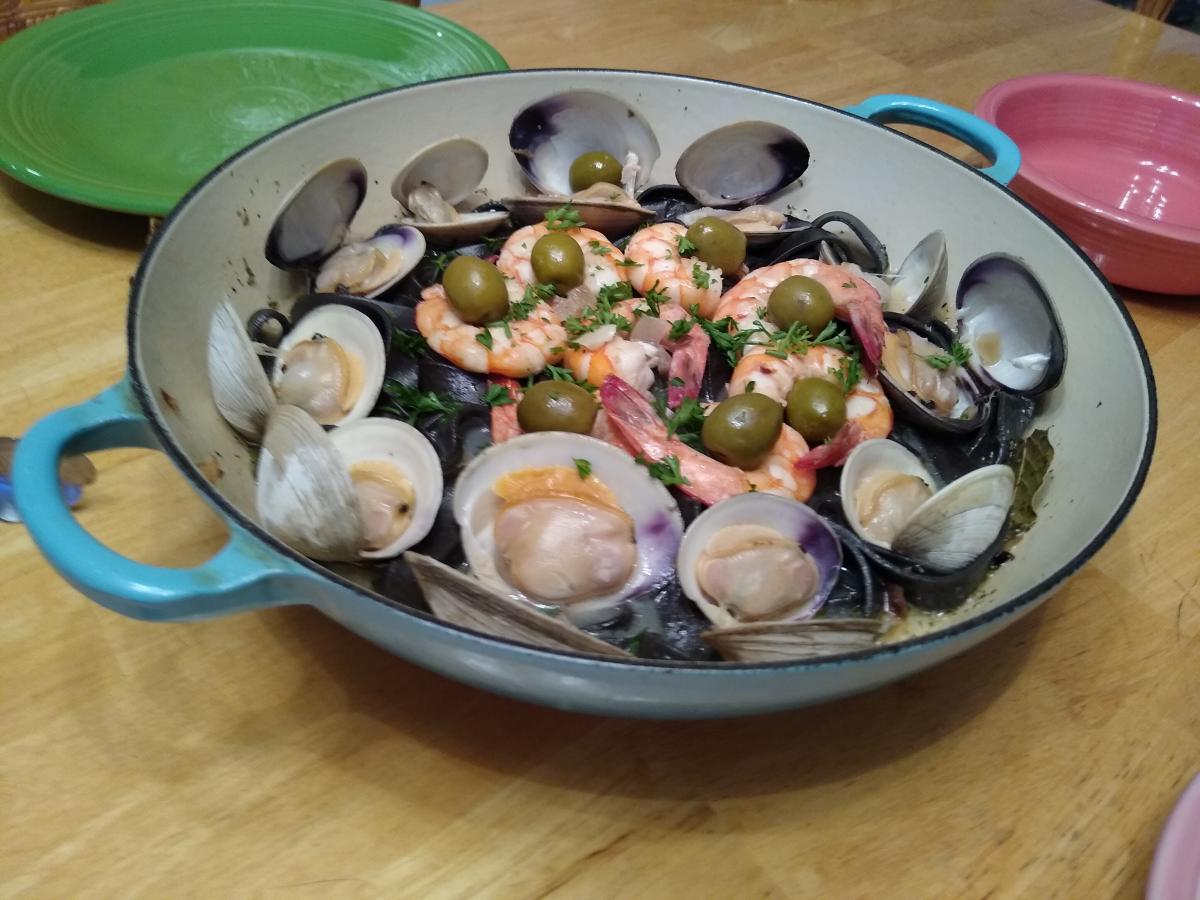
This is a particularly nice way to serve that old favorite Spaghetti with White Clam Sauce. It's really easy, and attractive if you can get the fresh shellfish.
The only trick to this is supplementing the dried angel-hair pasta and the canned clam sauce with some fresh shellfish for presentation (and nutrition, to be sure), and cooking ingredients for them.
Of course, you can go "all in" and make the sauce entirely from scratch, and even make the pasta at home, and while you're at it, how about you go and dig those clams yourself? So this is the version for people who can't do all that, and you can feel free to put in any extra labor that works for you. (Don't forget to update the Preparation Time!)
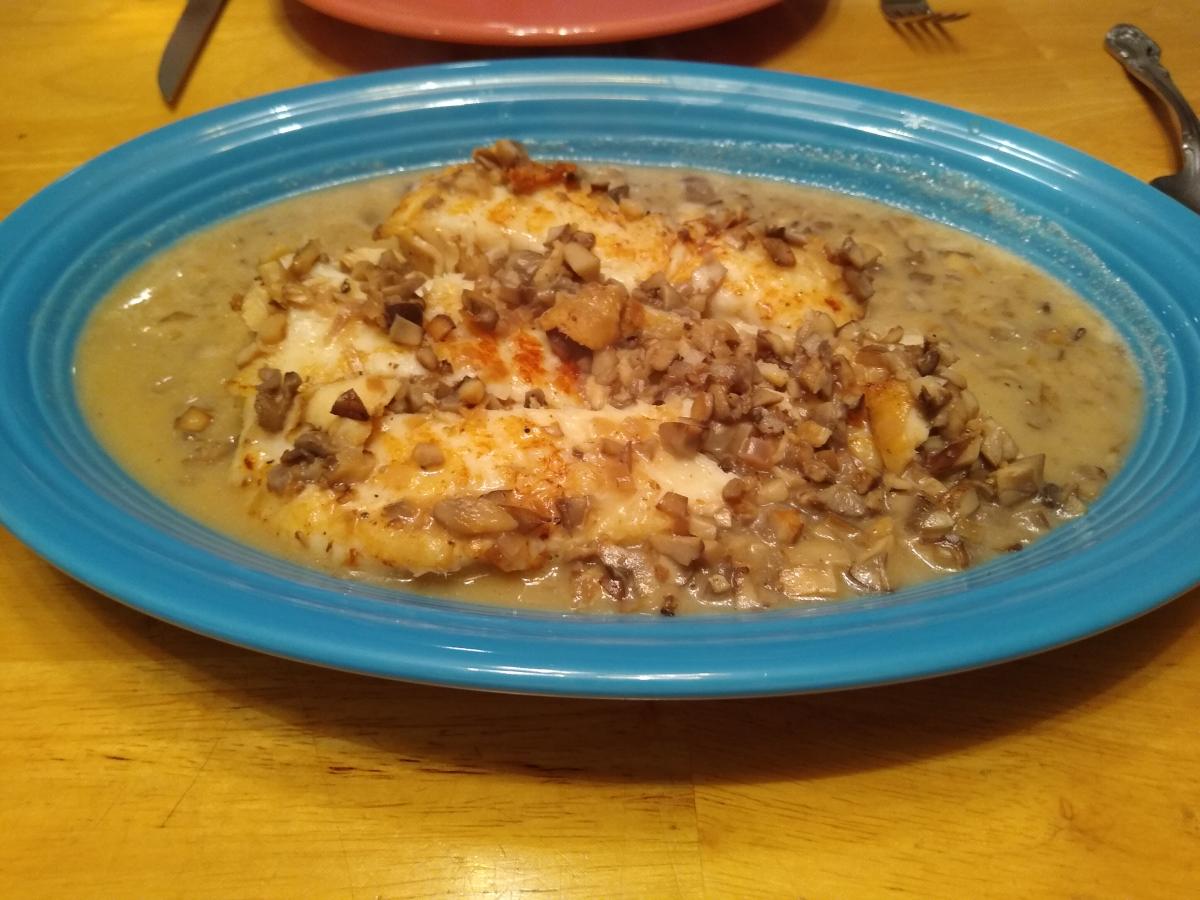
This recipe is for Turbot (use Halibut on this end of the Atlantic) cooked in sparkling dry white wine and mushrooms. It's delicate and wonderful!
I was gifted a bottle of Anno Domini prosecco by a neighbor. We don't drink prosecco very often, but I had seen this recipe and couldn't resist. And the recipe needs just a cup, so there's enough left to serve two for dinner!
White button mushrooms or baby bellas are good with this. If you use mushrooms that are too flavorful, you overpower the sauce which is really quite nice if you let it be.
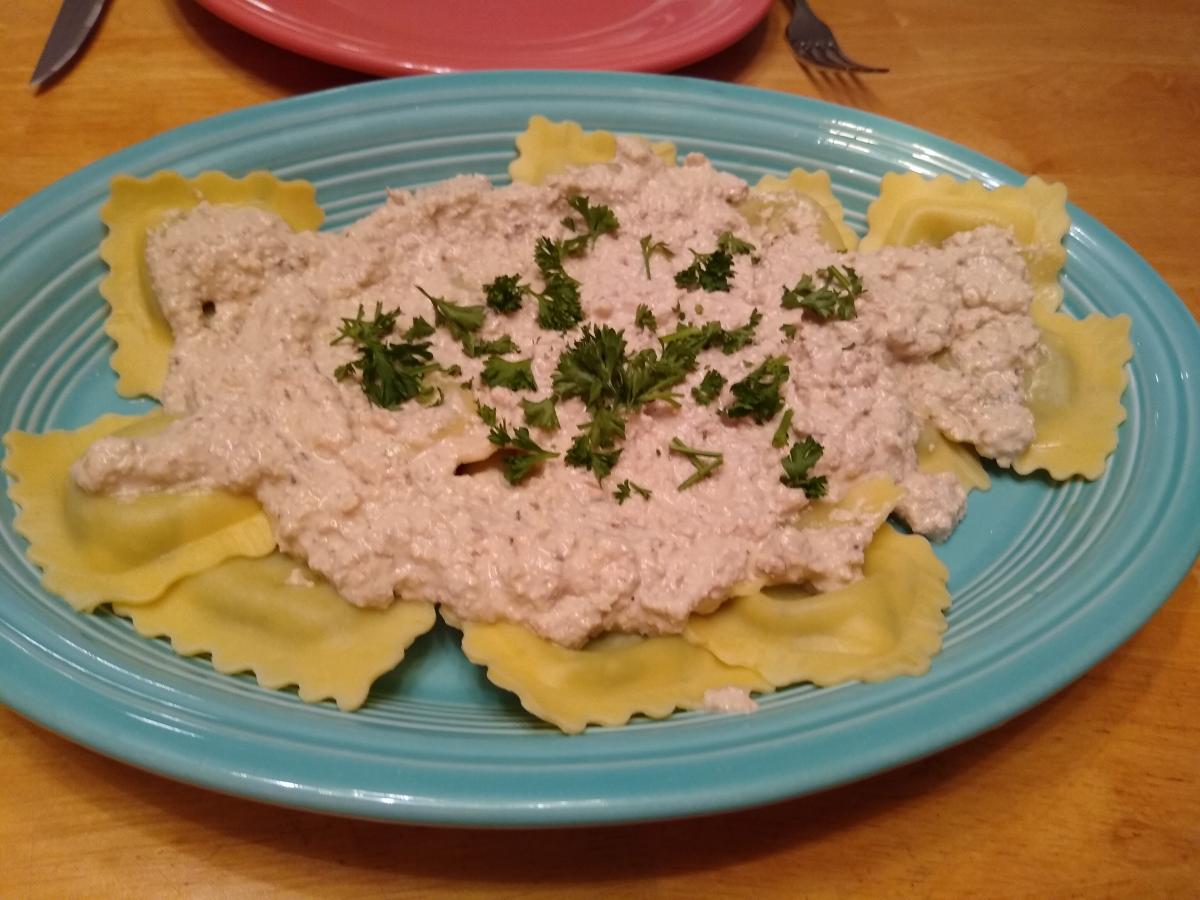
This is the classic partner to Pansotti, a traditional Ligurian ravioli filled with Preboggion (a mix of herbs of the Italian Riviera). We can't get that, so I had to use a store-bought spinach ravioli. But the Walnut Sauce is the star of the show... I saw a few recipes, and this one from the charming blog A Small Kitchen in Genoa looked really good.
It was certainly easy enough. I made only two changes: she calls for fresh marjoram and I substituted the more readily available (in Massachusetts in April) Oregano, and she skips the common step of soaking the walnuts in boiling water (which I did, without the unnecessary step of rubbing off the skins).
So we had this with spinach ravioli, and it's not Genoa, but it was still mighty tasty!
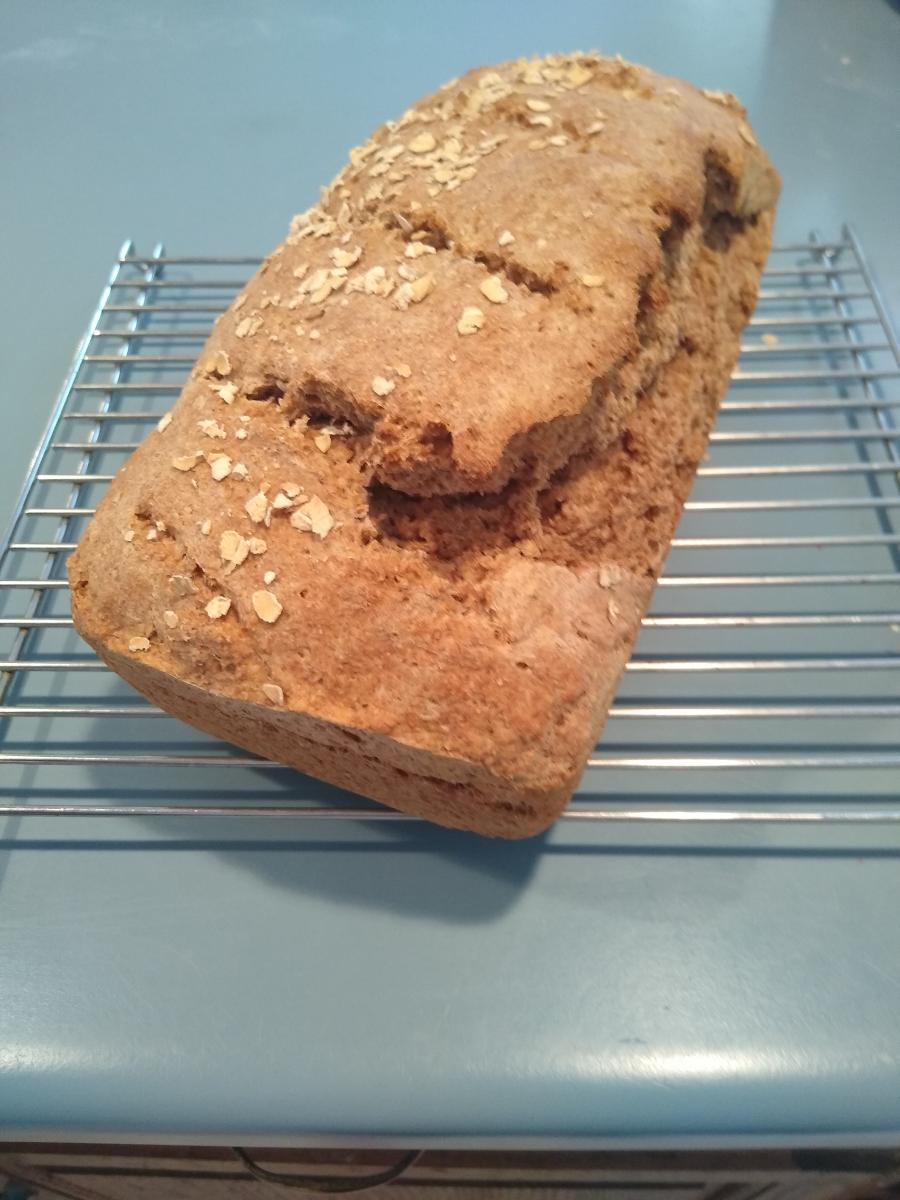
When we explored Ireland in 2016, this was the most universal food we experienced. Everywhere we stayed, there was brown bread in the morning. There was some variation, but it seemed to be more a matter of creative license than anything regional; I remember that the brown bread in Derry in the north was very like what we had in Kinsale on the south coast.
I have seen many recipes for Irish Brown Bread; this one comes the closest to what we remember from that trip.
Irish Brown Bread is not the same thing as Irish Whole Wheat Soda Bread. It's a little sweeter and moister, heavy enough to be substantial with a cup of tea for breakfast.
Not a discovery for the world, in the sense that Jean-Anthelme Brillat-Savarin meant it when he said "The discovery of a new dish confers more happiness on humanity than the discovery of a new star." No, it was just luck on our part that it came out so well.
I'm glad, too, that I thought to prepare it in a pan that could be brought to the table, so I could assemble it nicely while it was still cooking.
I'd been researching Italian pasta and risotto dishes, and I kept bumping into mentions of the black squid ink pasta. I'd seen it in shops but never had a reason to buy it.
But during the Great Coronavirus Lockdown of 2020, I was actively pursuing interesting pasta dishes, so one sunny Saturday afternoon we donned our face-masks and went to Lo Adoro on Rte 6a on Cape Cod. I've bought plenty of research materials there this spring, and I remembered seeing the black tagliatelle.
By the time we got home, I had assembled this Tagliatelle ai Frutti di Mare in my head for Friday, and it was wonderful! I hope you enjoy it.
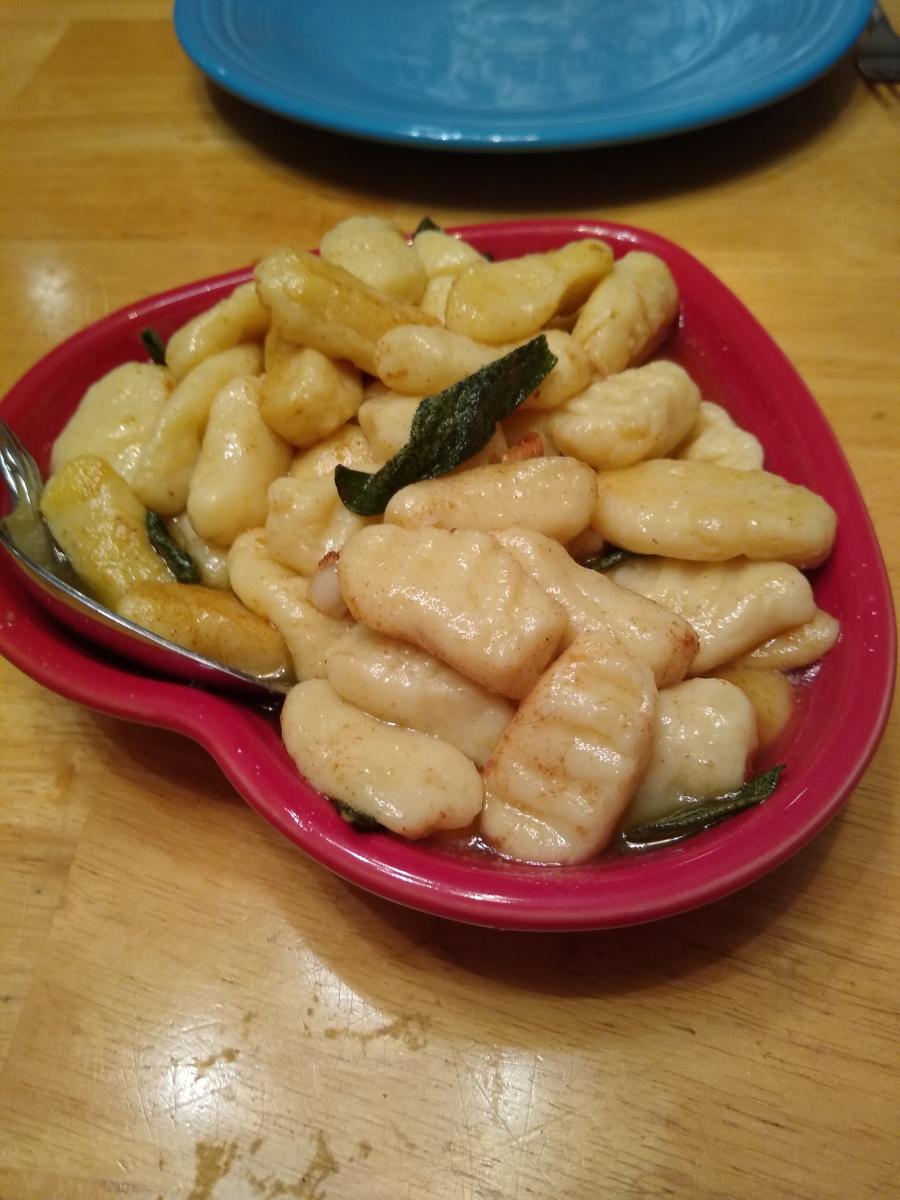
Potato Gnocchi with butter and sage is another easy and delicious marvel of Italian design.
This is one of those handy recipes that uses only a few common ingredients. The Potato gnocchi can be made ahead of time and frozen.
You need fresh sage for this. If you don't have it in the garden, then you'll want to get some. The other three ingredients may already be in your pantry or refrigerator!
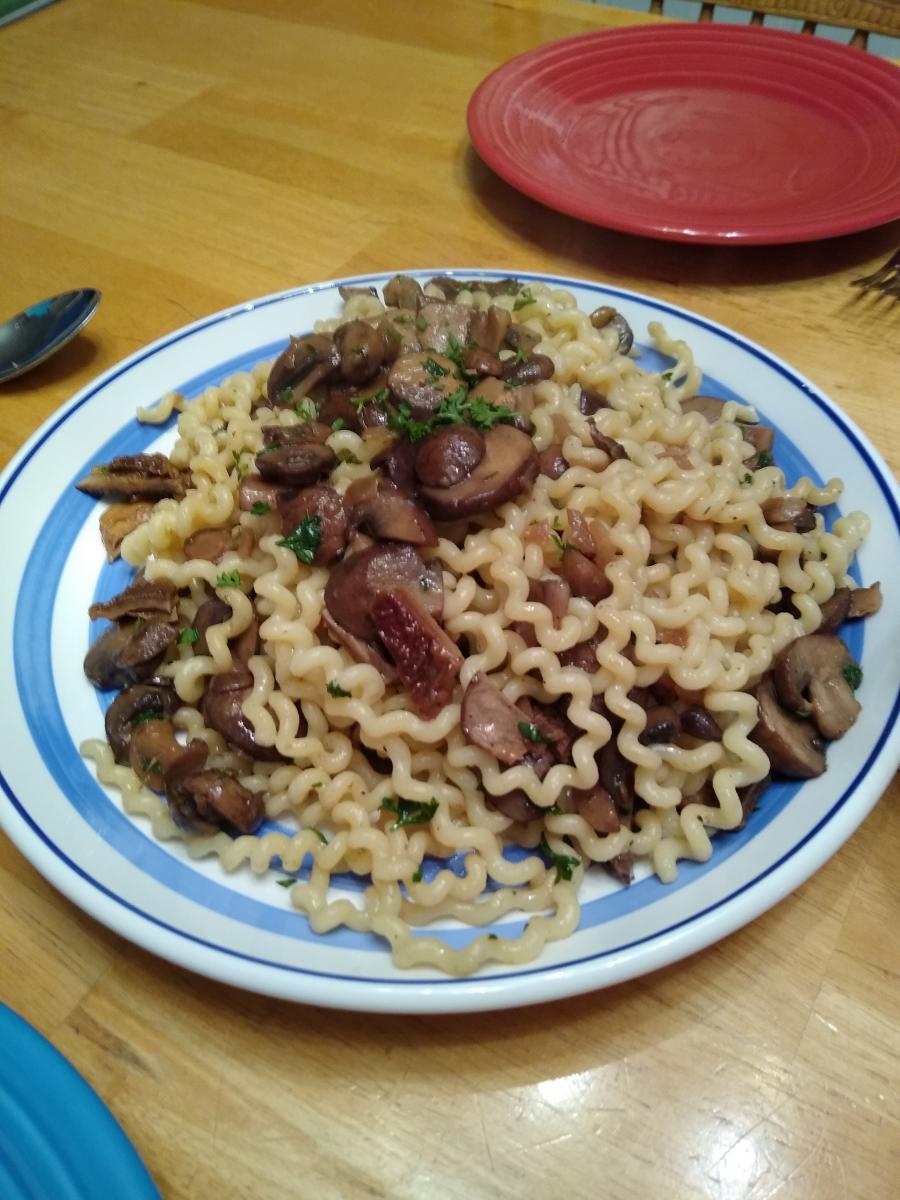
I love fusilli! In many ways it's just another dried pasta, but its long, long corkscrews sure make dinner into something different.
I found a couple of recipes for fusilli or other pasta with mushrooms, so I tinkered a bit and came up with a winner.
One of the recipes that I saw included about a cup of chopped tomatoes. That might be good, but in my head I could taste the mushrooms coming together and decided to save the tomatoes for another day.
I think this would be great with any dry Piedmont or Tuscan red.
Everyone knows that classic Italian favorite Fettuccine Alfredo! But most of what we get in this country is a rich, somewhat bland mass-consumption version of a very fine (if labor-intensive) recipe from Rome. The original version is well known and the technique is brilliant - this one is well worth making.
This delicious bit of decadence came from my late friend Dexter, a past president of the Old Colony Club. We often serve it at gala events at the club.
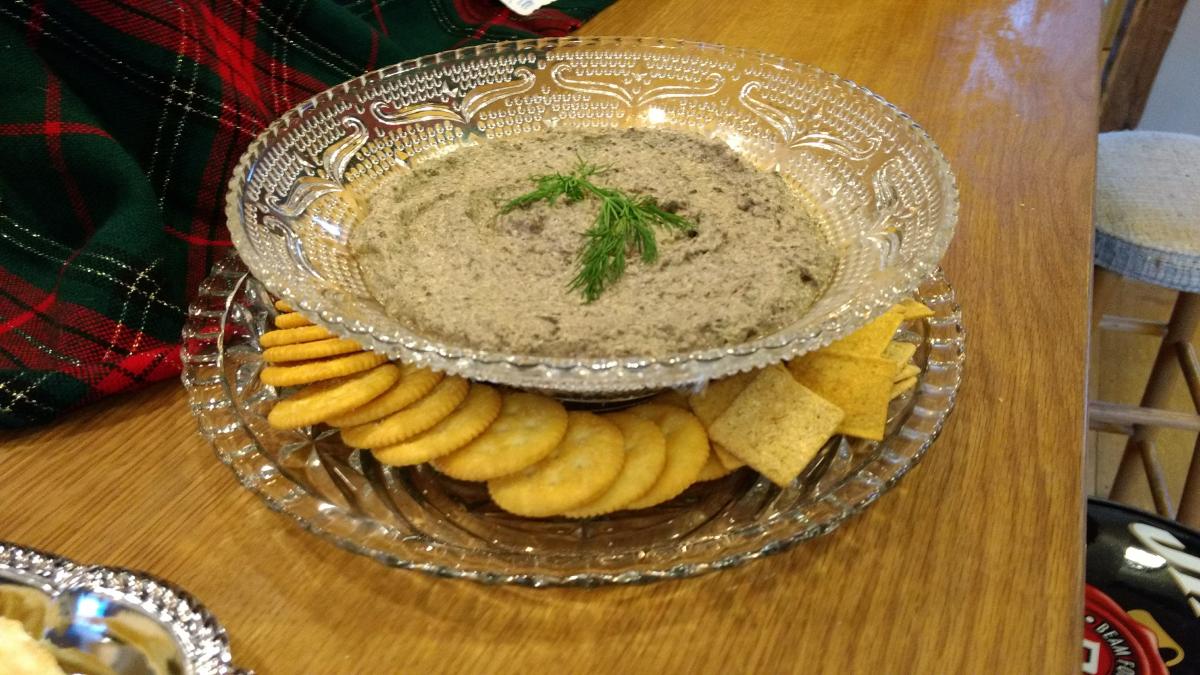
This is one of those simple recipes that any fool can make (that is, the technique is simple), but it requires the finest ingredients that you can get, and the experience can be immeasurably improved in the right environment. This would work just fine at a Super Bowl party, but it responds very well to a fancy event!
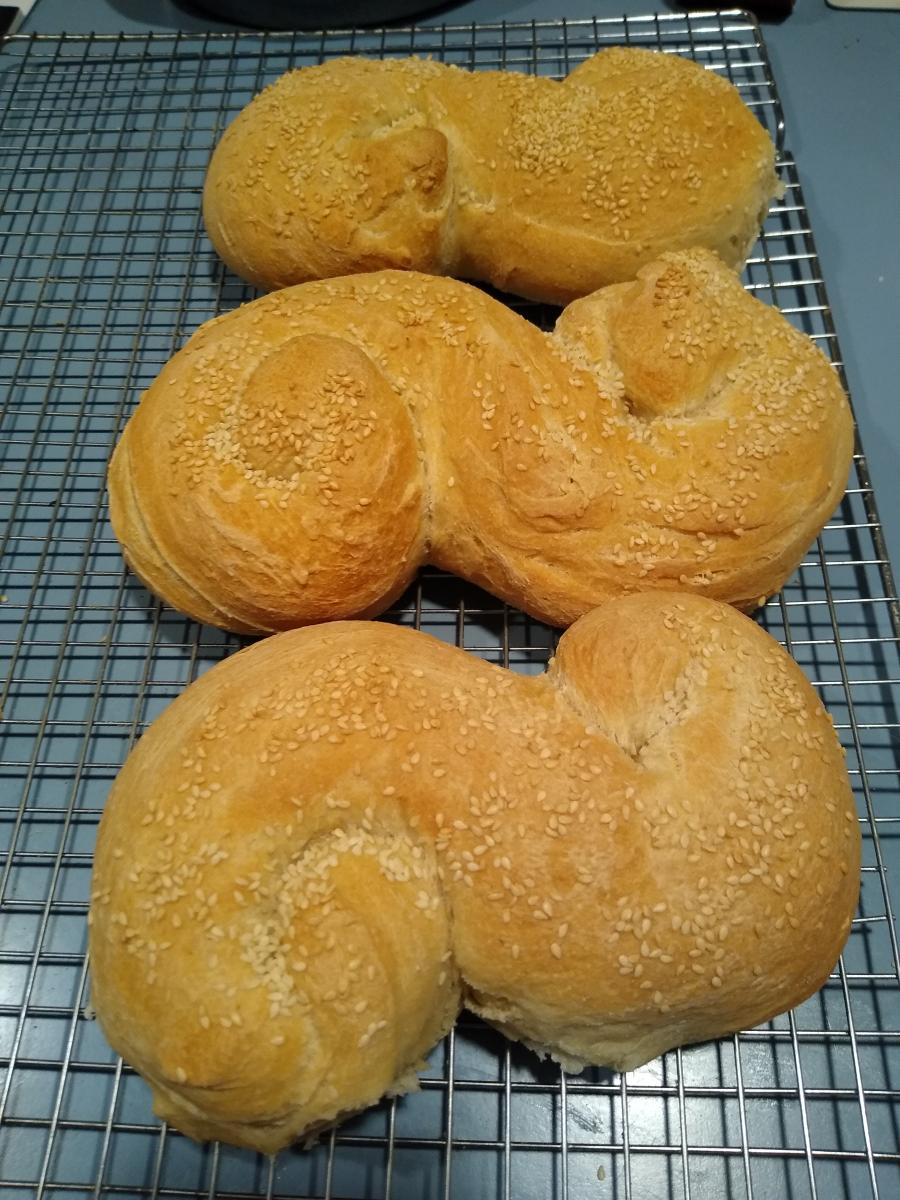
This traditional Italian semolina bread is delicious and fun to make, but it doesn't keep very well. Fortunately it does freeze well.
The dough is easy to work with. It can be baked into many shapes; the sesame-sprinkled s-shape shown here is the occhi di Santa Lucia, or the eyes of Saint Lucy.
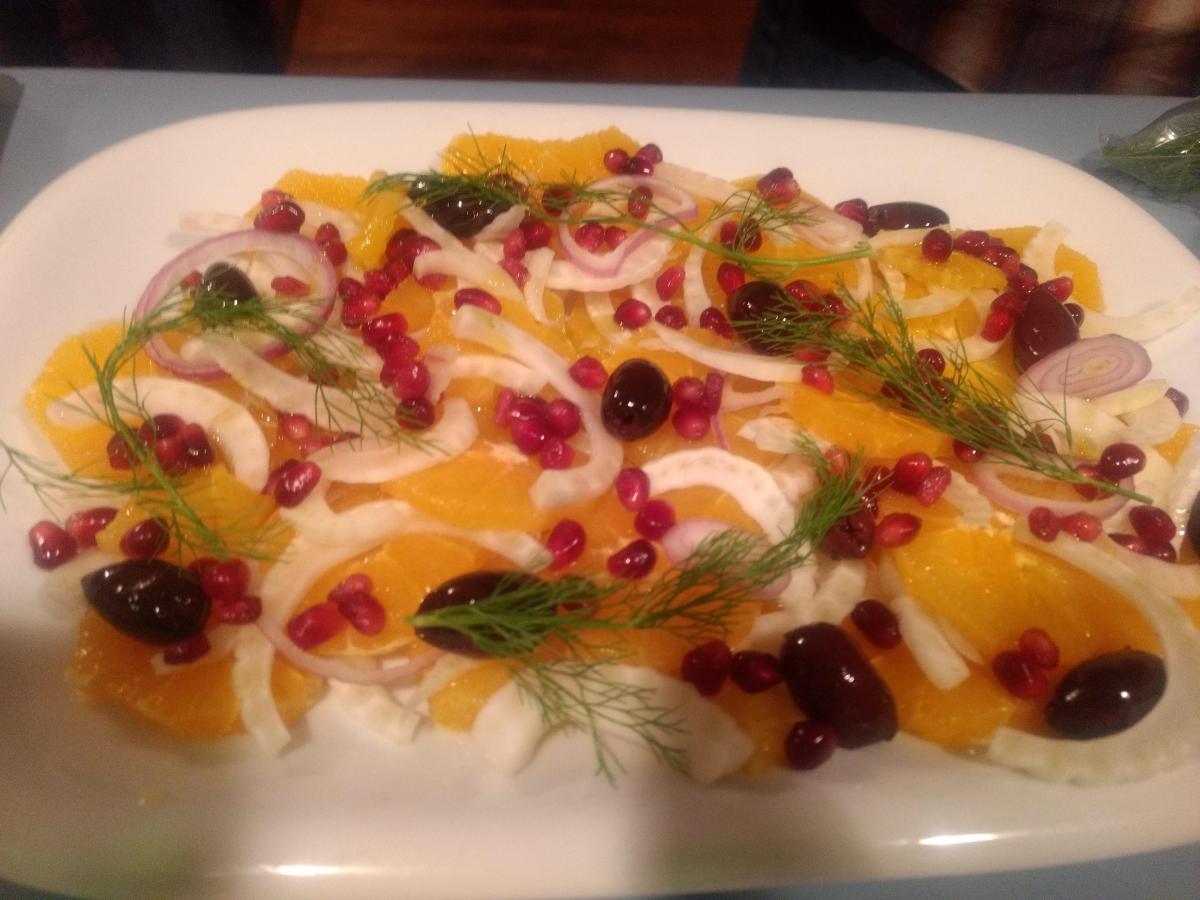
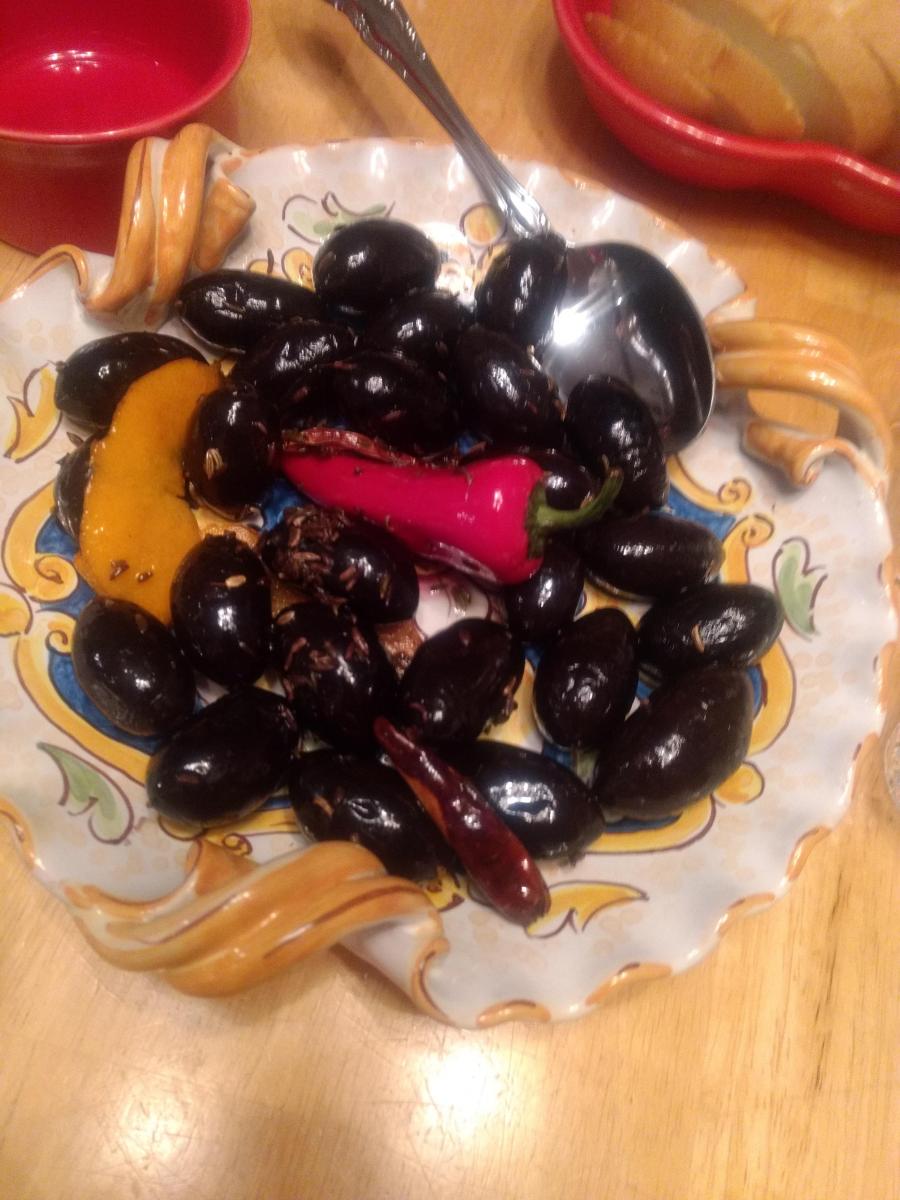
Deep in a cold New England winter, we had John and Christina over for a Sicilian feast to brighten things up. Most of these recipes came from a fine cookbook called Sicily, and most of these were dishes that we had enjoyed in Sicily. The Sicilian names are similar to Italian but not the same, for example "cu" for "con" - Sicilian is an old and proud dialect!
I list this as Eastern Sicilian because all of the showstopper recipes are from the Eastern and Southern slopes of Mount Aetna from Messina to Siracusa and west to the ancient Greek temples at Agrigento; someday I'll do a Western Sicilian dinner that touches on Palermo, Trapani, Sciaccia, and Marsala.
We started light with two appetizers before moving on to soup, salad, fish, meat, and dessert courses:
Maiale cu Cioccolatu is a Sicilian dish of pork loin with an exquisite savory rich chocolate sauce.
The town of Modica, in inland south-eastern Sicily, is known for chocolate. We went there in 2018 as part of our Sicilian vacation, but the town itself was crowded and the driving was not fun so we got out of there, having already acquired bitter Modican chocolate at the farmers market in Siracusa.
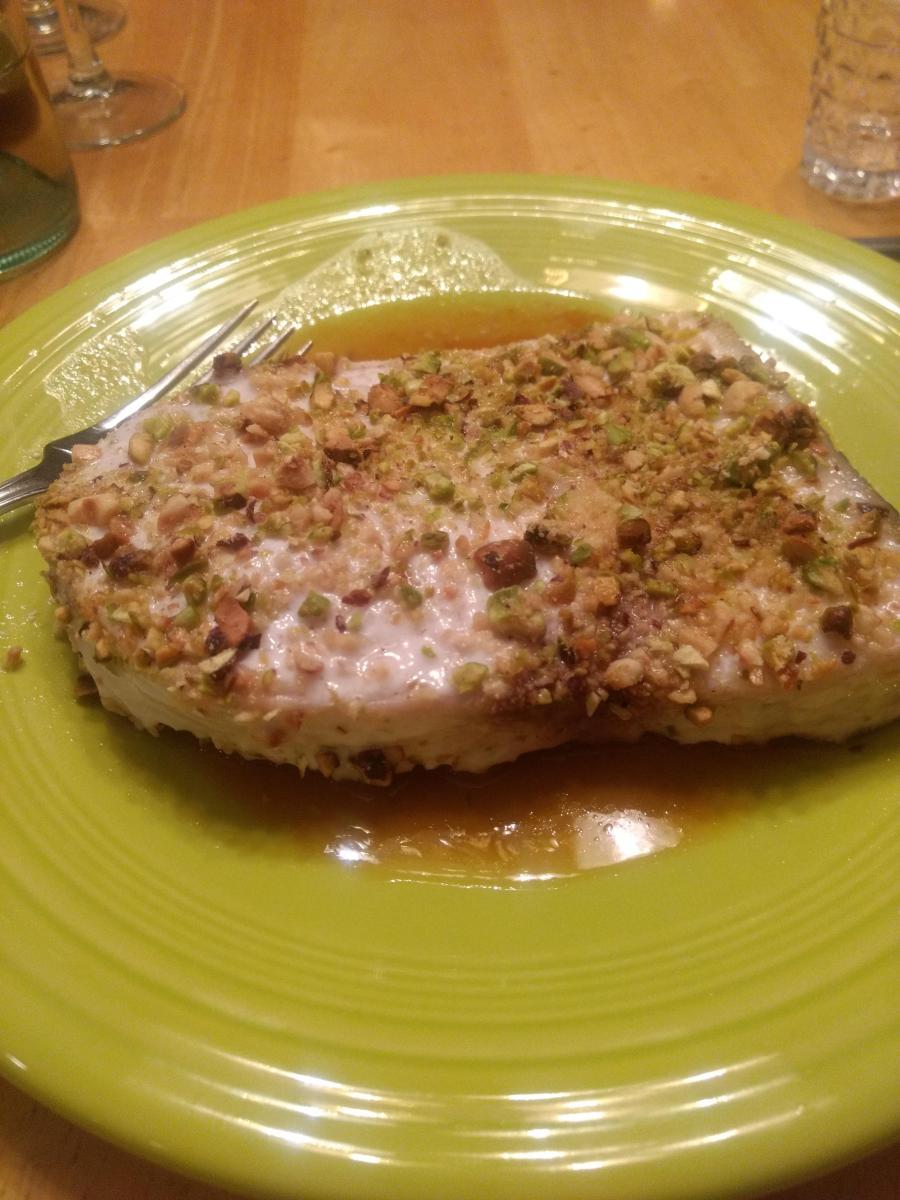
This dish, called (more or less) Pisci Spata in Crusta ri Fastuchi in Sicily the Cookbook is a pistachio-crusted swordfish very like what astonished me in Chianalea, the swordfishing port of Scilla at the very tow of the boot of Italy. I say more-or-less because that recipe is for monkfish, but Scilla is all about swordfish and that's how I had it. In all other particulars, this is how to replicate that heavenly dish.

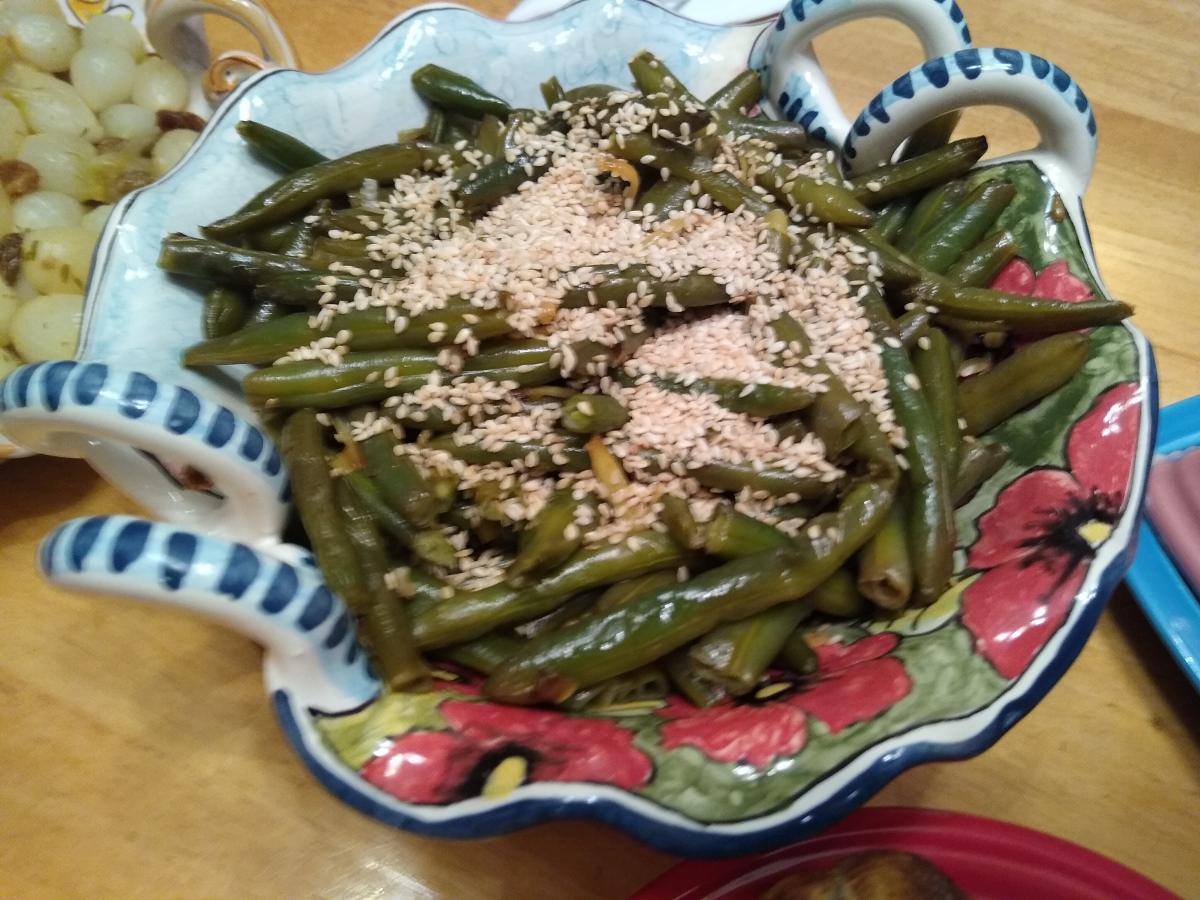
 This was a special request from Lorna, reminiscing about her mom's kitchen. It's easy to make, requires only a few common ingredients, and it's not too sweet.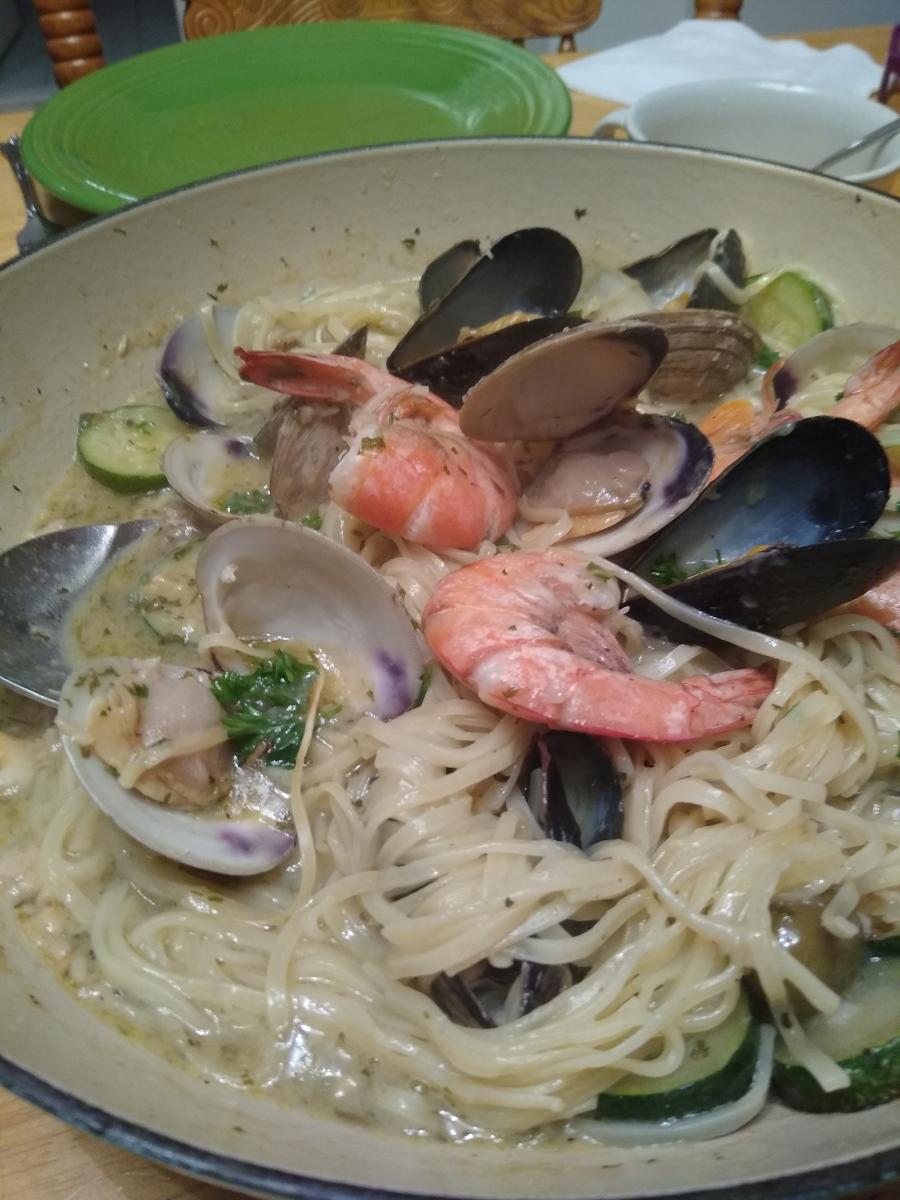
 When we explored Ireland in 2016, this was the most universal food we experienced. Everywhere we stayed, there was brown bread in the morning. There was some variation, but it seemed to be more a matter of creative license than anything regional; I remember that the brown bread in Derry in the north was very like what we had in Kinsale on the south coast.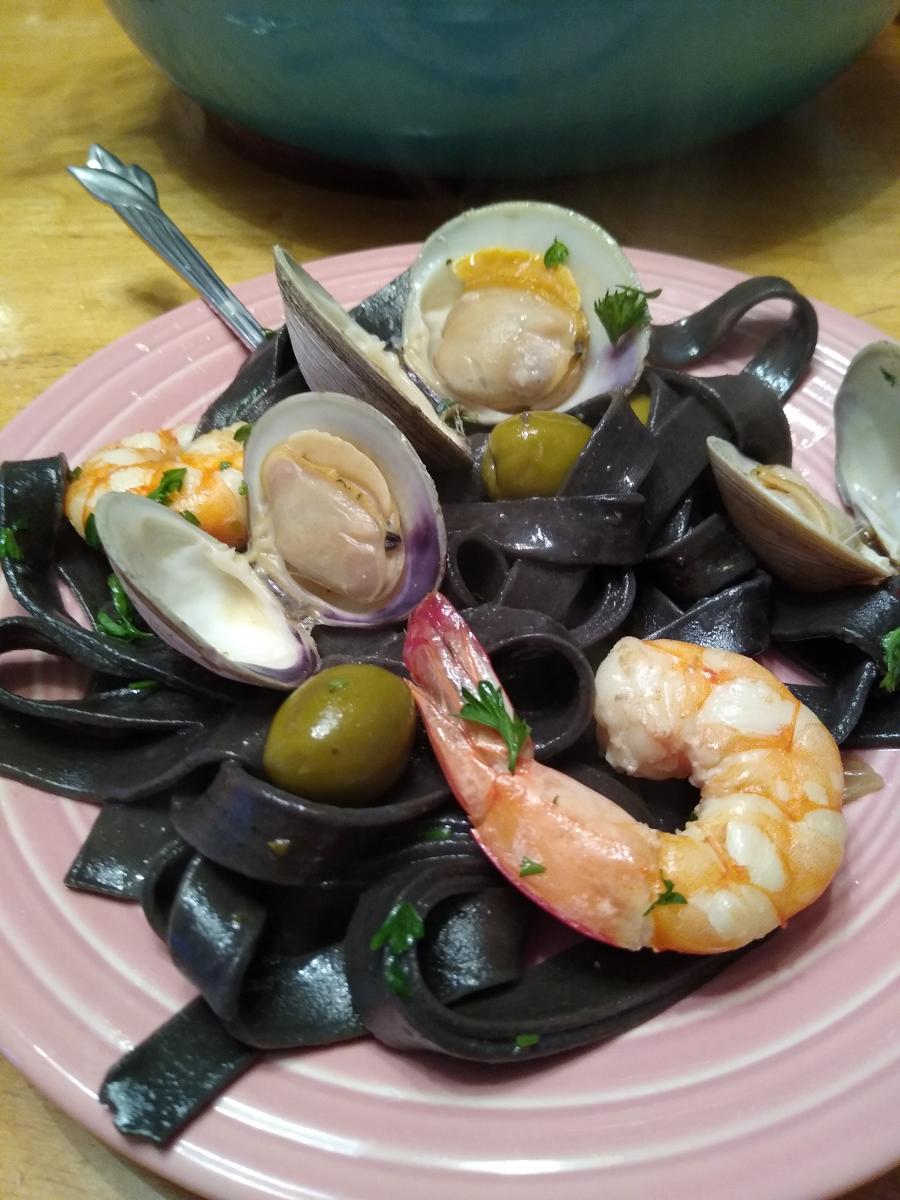
 I love fusilli! In many ways it's just another dried pasta, but its long, long corkscrews sure make dinner into something different.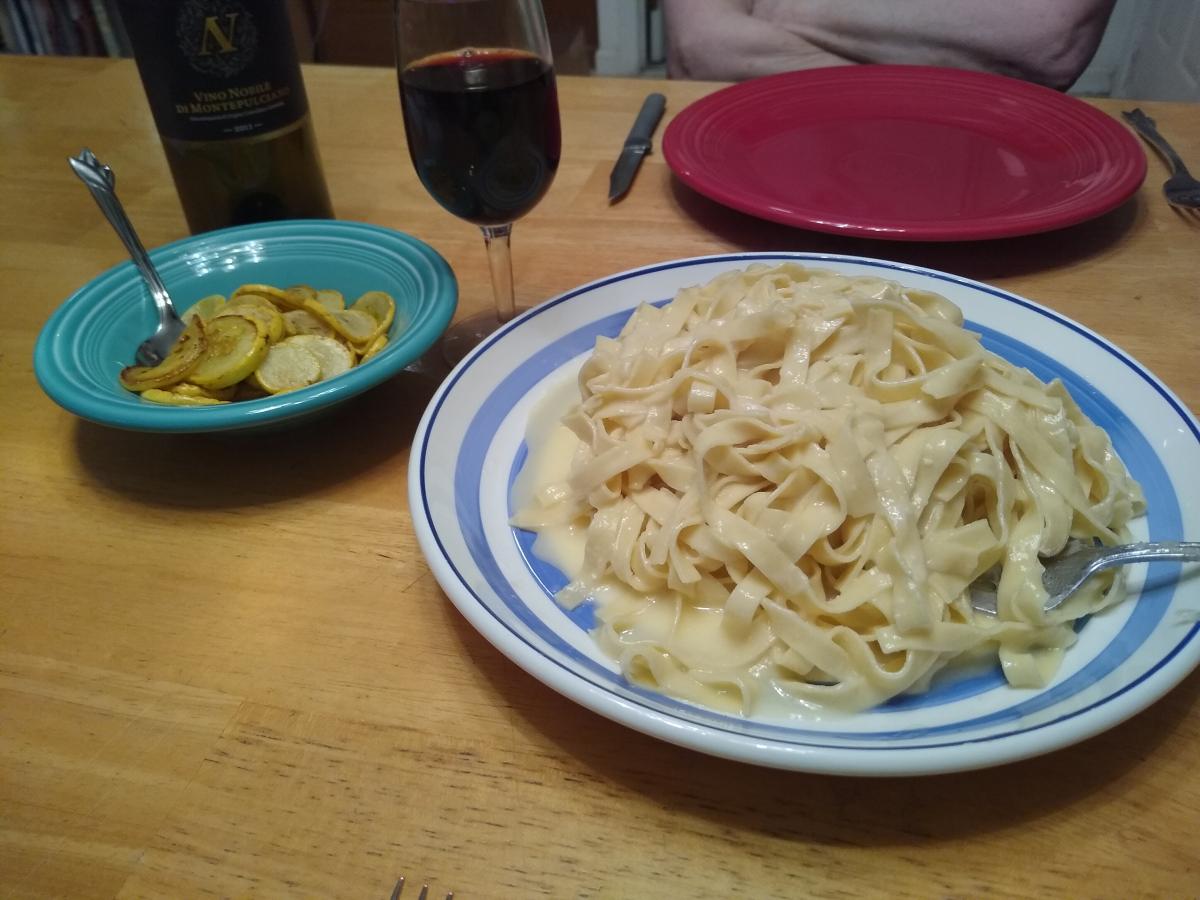
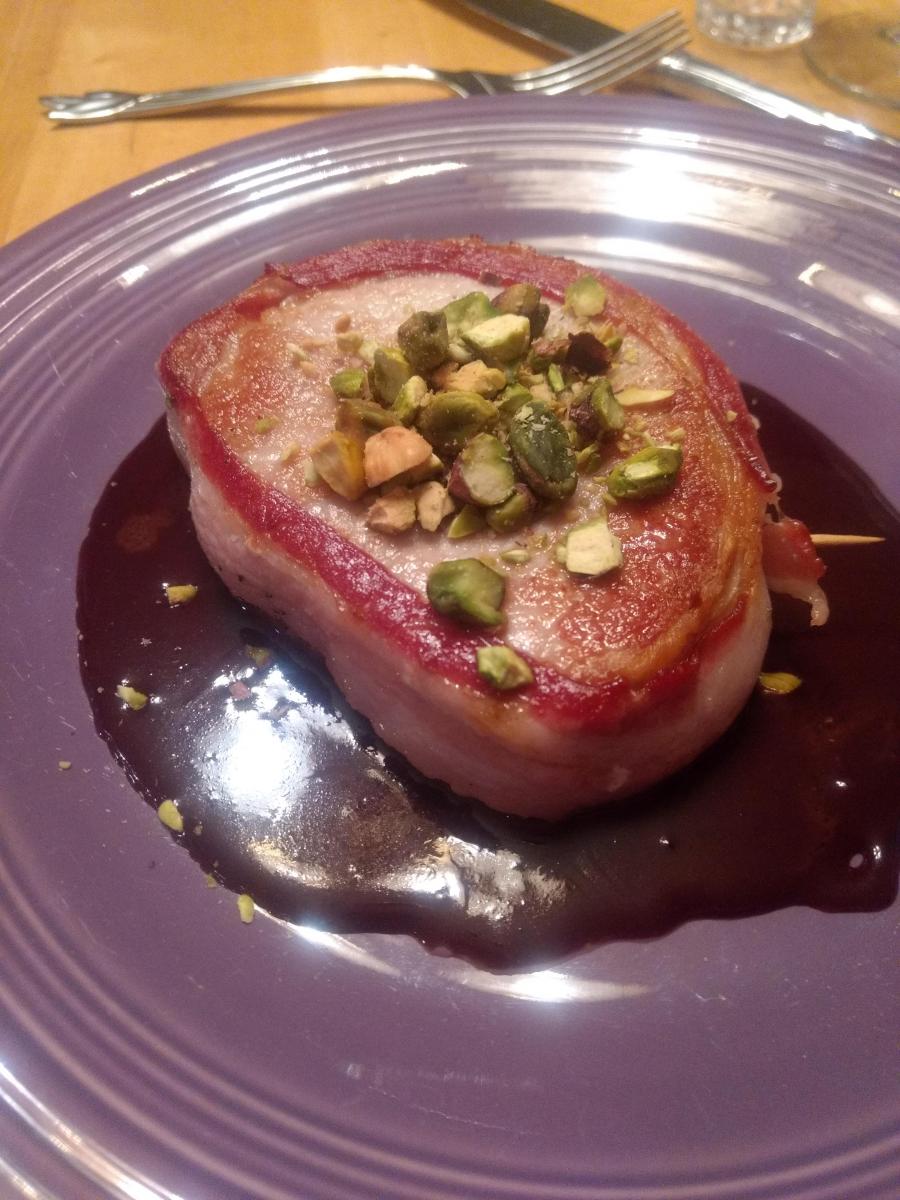 Maiale cu Cioccolatu is a Sicilian dish of pork loin with an exquisite savory rich chocolate sauce.
 This dish, called (more or less) Pisci Spata in Crusta ri Fastuchi in